
Best Websites for Motion Design Inspiration in 2026
Motion design lists go stale fast. We opened every site on this one in October 2026, and found that one of the most famous places to watch short films no longer opens in the UK at all.
By the Spark team ·
For motion design inspiration in 2026, start with Motionographer for what's new, STASH if you'll pay $9.99 a month for a deep library of finished work, Behance's Motion gallery for process and style frames, Art of the Title for title sequences and Eyecandy when you need to find a technique by name. Animators should add Sakugabooru. And for a director's or studio's whole body of work, nothing beats the studio's own site.
We opened every site below in October 2026 and checked prices on each one's own pages. Two things surprised us. Vimeo's Staff Picks channel no longer opens from the UK, and a title sequence blog that still turns up on these lists looks untouched since 2020, so it isn't here. We make Spark, a reference library for video, so the list leans towards what's useful when you're building a pitch.
Looking for live action ads? That's a different hunt, and our list of commercial film inspiration sites covers Ads of the World, the award archives and the stills libraries. This one is for work that moves because somebody animated it.
The list, with prices
| Site | Best for | Price (as of October 2026) |
|---|---|---|
| Motionographer | New work, studio stories and industry news, daily | Free |
| STASH | A big streaming library of finished motion, VFX and animation, with credits | News free; Permanent Collection $9.99 a month or $99 a year; Corporate $489 a year; 7 day trial |
| Art of the Title | Title sequences, with long interviews about how they were made | Free (reader supported) |
| Behance | Process: style frames, boards and breakdowns inside each project | Free |
| Dribbble | UI, logo and product animation loops | Free to browse |
| Eyecandy | Looking up a technique: datamosh, morphing, kaleidoscope, infinite loop | Free |
| Vimeo | Staff Picks outside the UK and EU; any film by direct link | Free |
| Short of the Week | Animated shorts, picked and written up | Free |
| Sakugabooru | 2D animation clips, tagged by show, effect and animator | Free |
| Cartoon Brew | Animation industry news, features and studio tours | Free |
| The Motion Awards | A jury's pick of the year, sorted by discipline | Free to browse winners; entry $398 ($198 students) |
| Annecy | Festival winners, including commissioned and TV work | Free to browse |
| LottieFiles | Lightweight UI animations you can open and pick apart | Free library; paid plans from $19.99 per user a month billed yearly |
| Studio sites (BUCK, Oddfellows, Gunner, ManvsMachine and more) | Watching one team's choices across twenty briefs | Free |





Motionographer: the daily read
Motionographer turned 20 this year, and it's still our first read for new motion work. The homepage runs in three columns. Main carries the long features (studio profiles, how a piece was made), Quickies are short posts that put one new project in front of you with its credits, and News covers studios, people and tools.
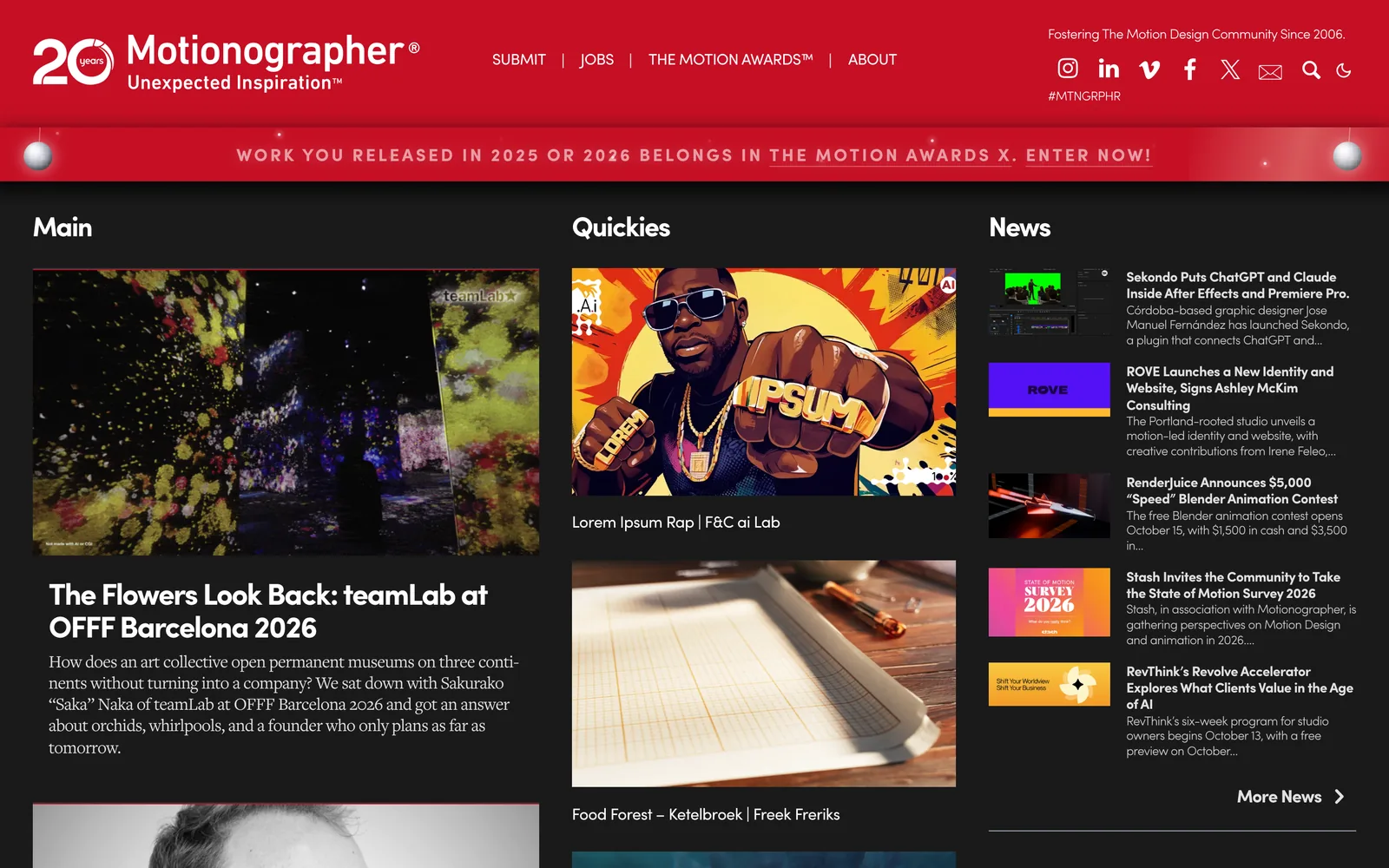
It's free, it has a jobs board, and it runs The Motion Awards (more below). Our habit is a quick scan of Quickies a few times a week and a proper read of one feature at the weekend. If a Quickie stops you, follow the studio credit before you do anything else, because the studio's own site will show you whether that piece is a one-off or how they always work.
STASH: the paid library worth paying for
STASH calls itself the largest online library of animation, VFX and motion design. The news posts on the homepage are free to read. Each one embeds the film and lists the full credits, often down to the CG lead, editor, colourist and sound studio, which is gold when you're trying to work out who to hire.
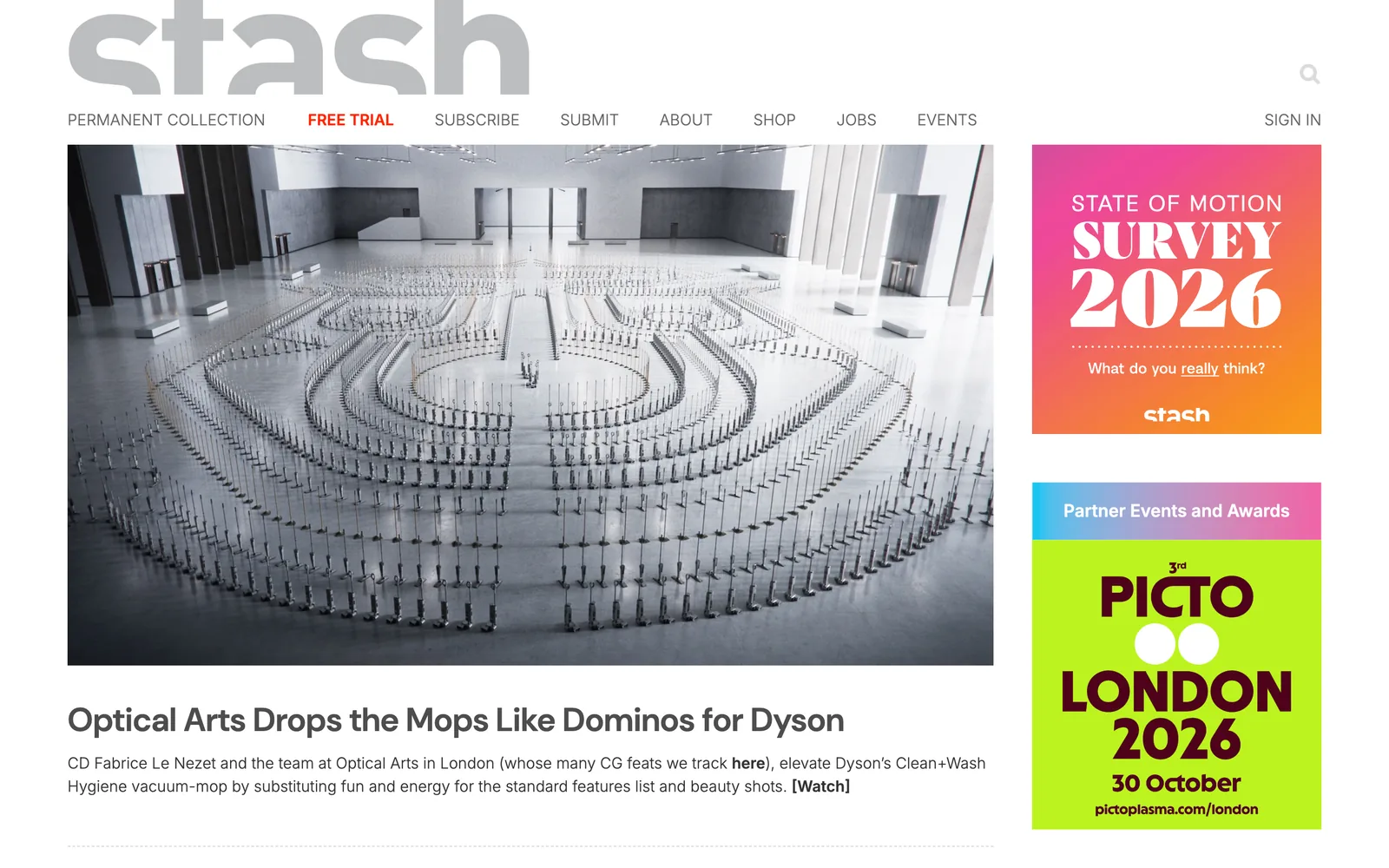
The Permanent Collection is the subscription part: a searchable streaming archive of finished work. As of October 2026 it's $9.99 a month or $99 a year for one login, and $489 a year for a corporate plan with unlimited users, which studios and schools use. There's a 7 day free trial. If motion is your job, the yearly plan pays for itself the first time a client asks for "something like that 3D thing for the cereal brand, a few years ago".
Art of the Title: the title sequence archive
Art of the Title is the deepest archive of title sequences online, browsable by title, designer and studio, and each feature pairs the sequence with a long interview about how it was made. It's free and supported by readers through Patreon.
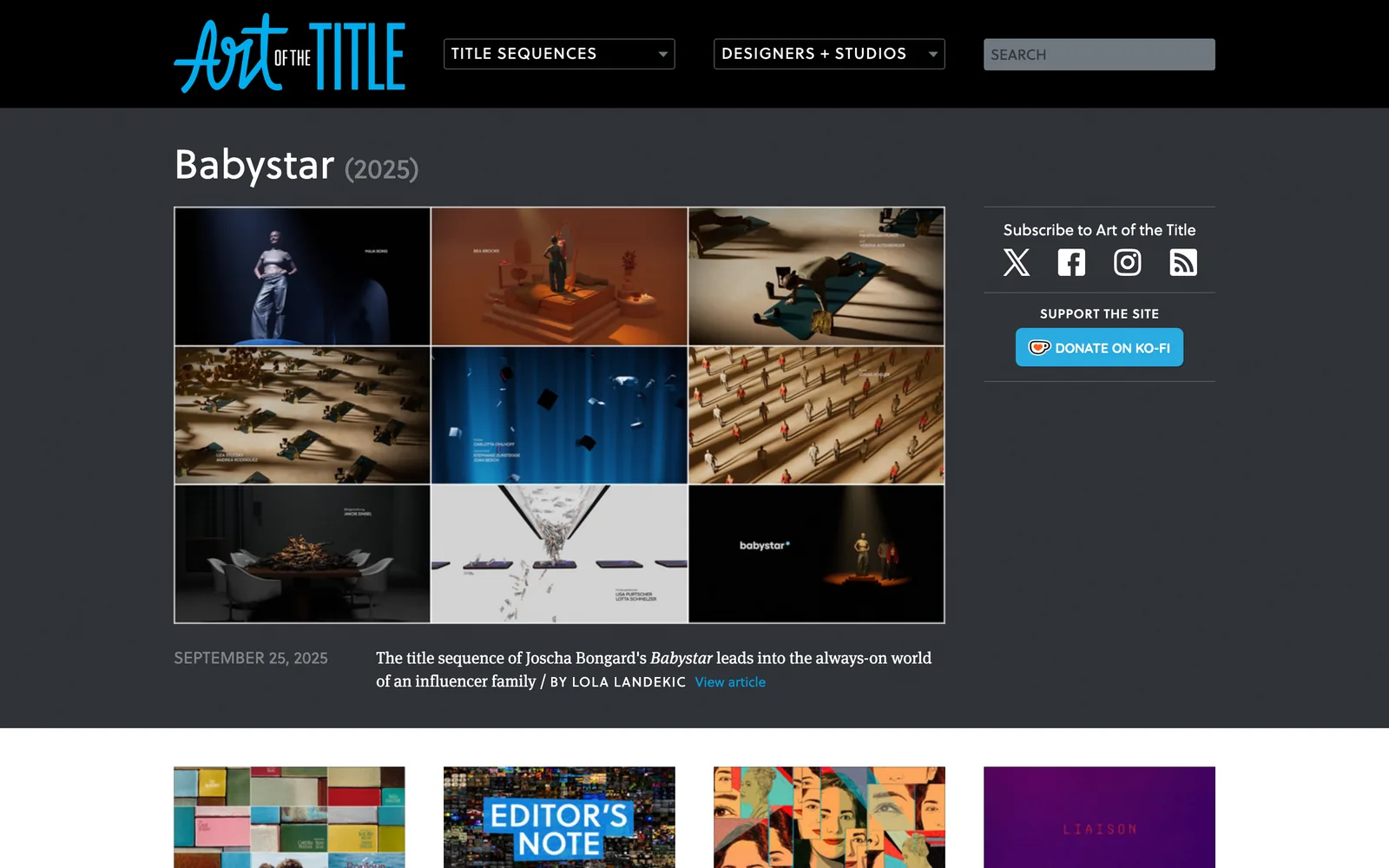
Be realistic about the pace. New features arrive slowly now (the latest, Babystar, went up in September 2025), so it's not a daily stop. The archive is why you go. When a brief says opening titles, or a typographic sequence for a brand film, an hour here teaches you the vocabulary the client is half remembering.
Vimeo Staff Picks, and the UK problem
For years, Vimeo Staff Picks was the first free stop for animated shorts and the directors studios were about to sign. From the UK it no longer works. When we opened the Staff Picks channel in October 2026, it redirected to a European Film Academy partnership page, and the channel's video list said the page isn't available. Vimeo stopped showing curated pages like Staff Picks to viewers in the UK and EU in late 2024, citing local regulations, as filmmakers reported at the time.
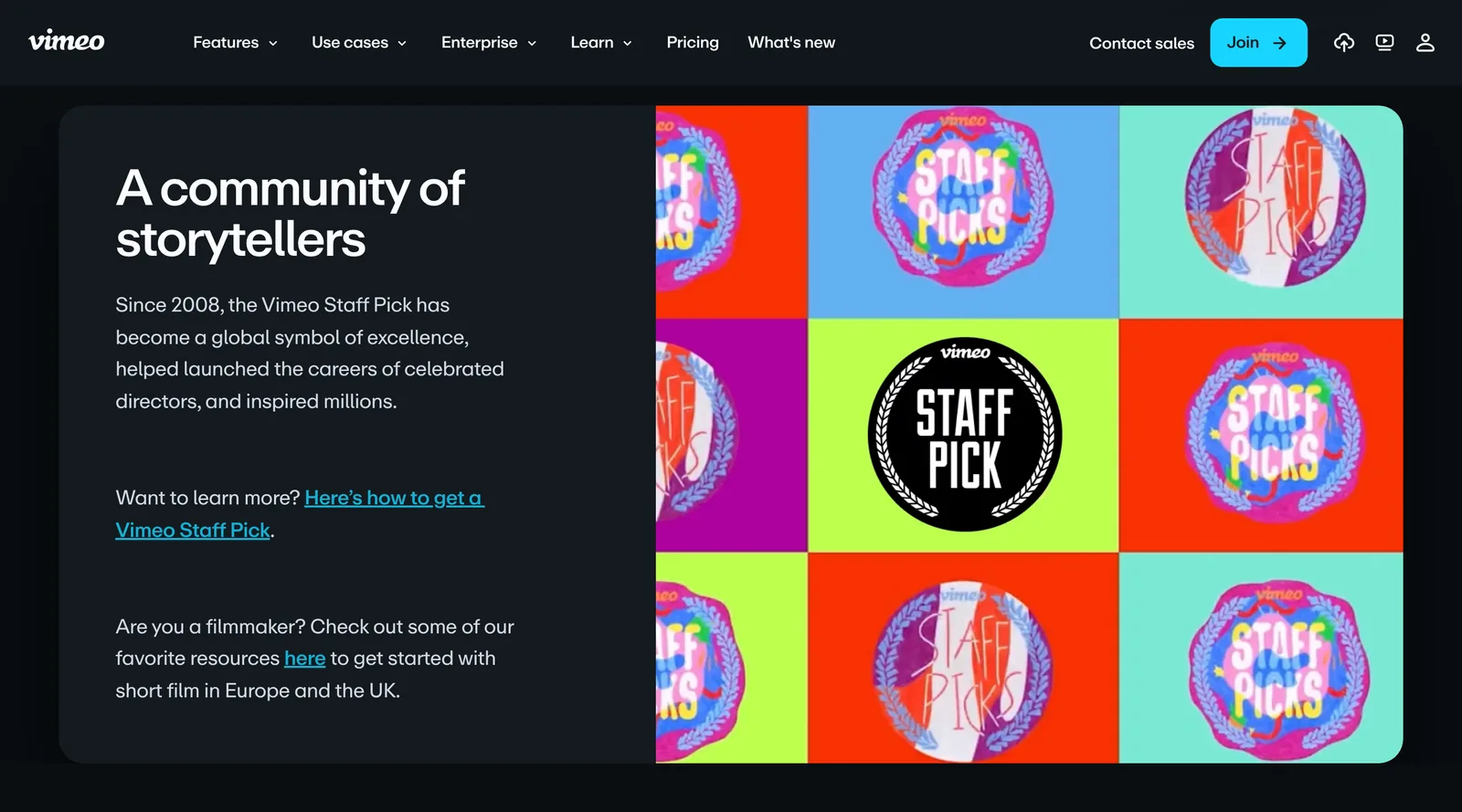
Outside the UK and EU, Staff Picks is still worth a weekly look. Inside them, individual Vimeo videos still play from a direct link or an embed, so the films are all still there. You just can't browse them. For a UK friendly replacement, Short of the Week has an animation genre with every film written up, and its Shortverse site carries an animation channel.
Behance and Dribbble: process, not just polish
These two get lumped together. For motion they do different jobs.
Behance's Motion gallery is picked by Behance's own curators and splits into Motion Graphics, Film, GIF, Set, Props and Costume, and Styleframing. That last one is the most useful for anyone pitching. Studios and artists post the style frames, boards and colour scripts behind a film, not just the final cut, so you see how an idea looked before it moved. If you're building frames yourself, our guide to making style frames starts there.
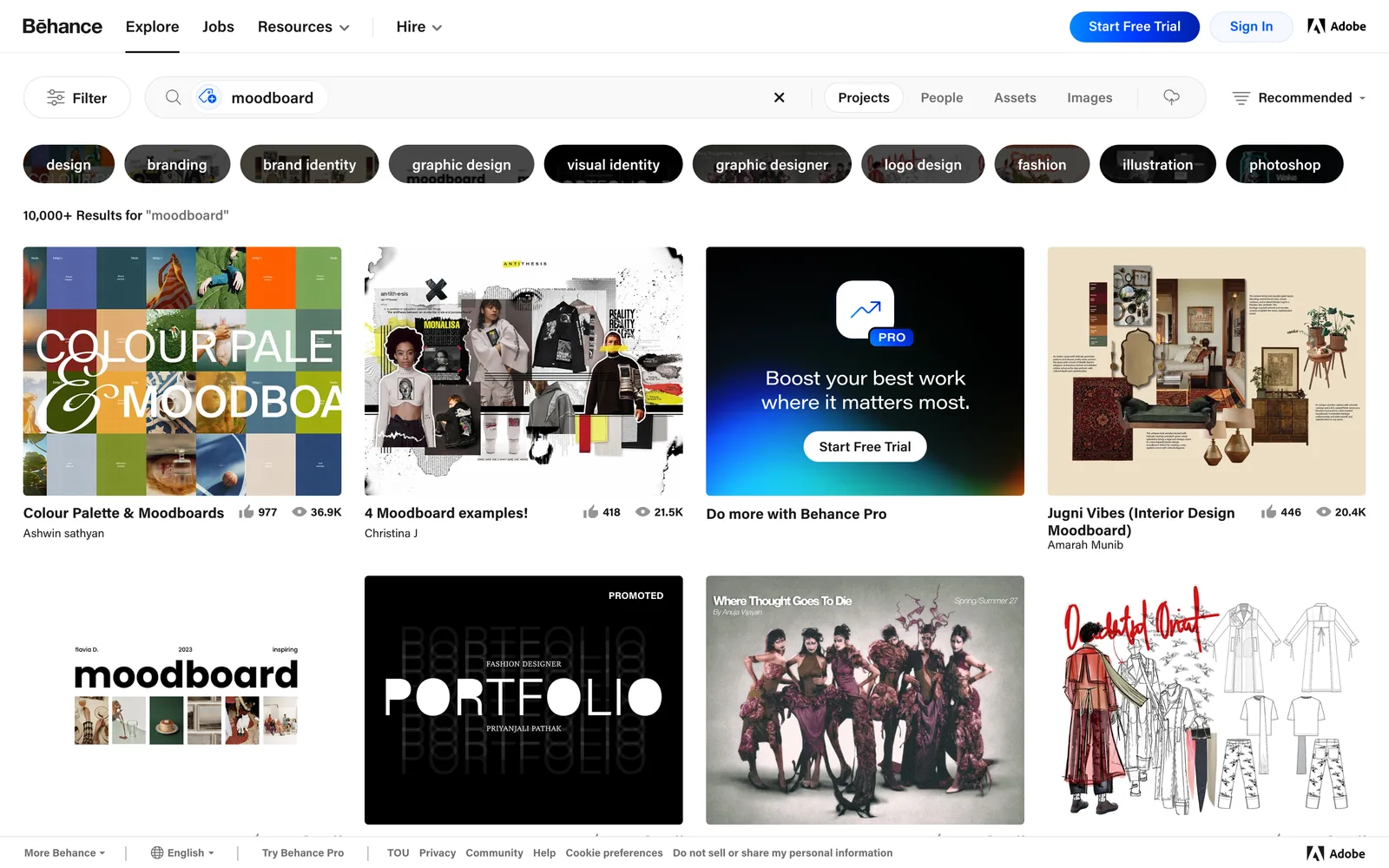
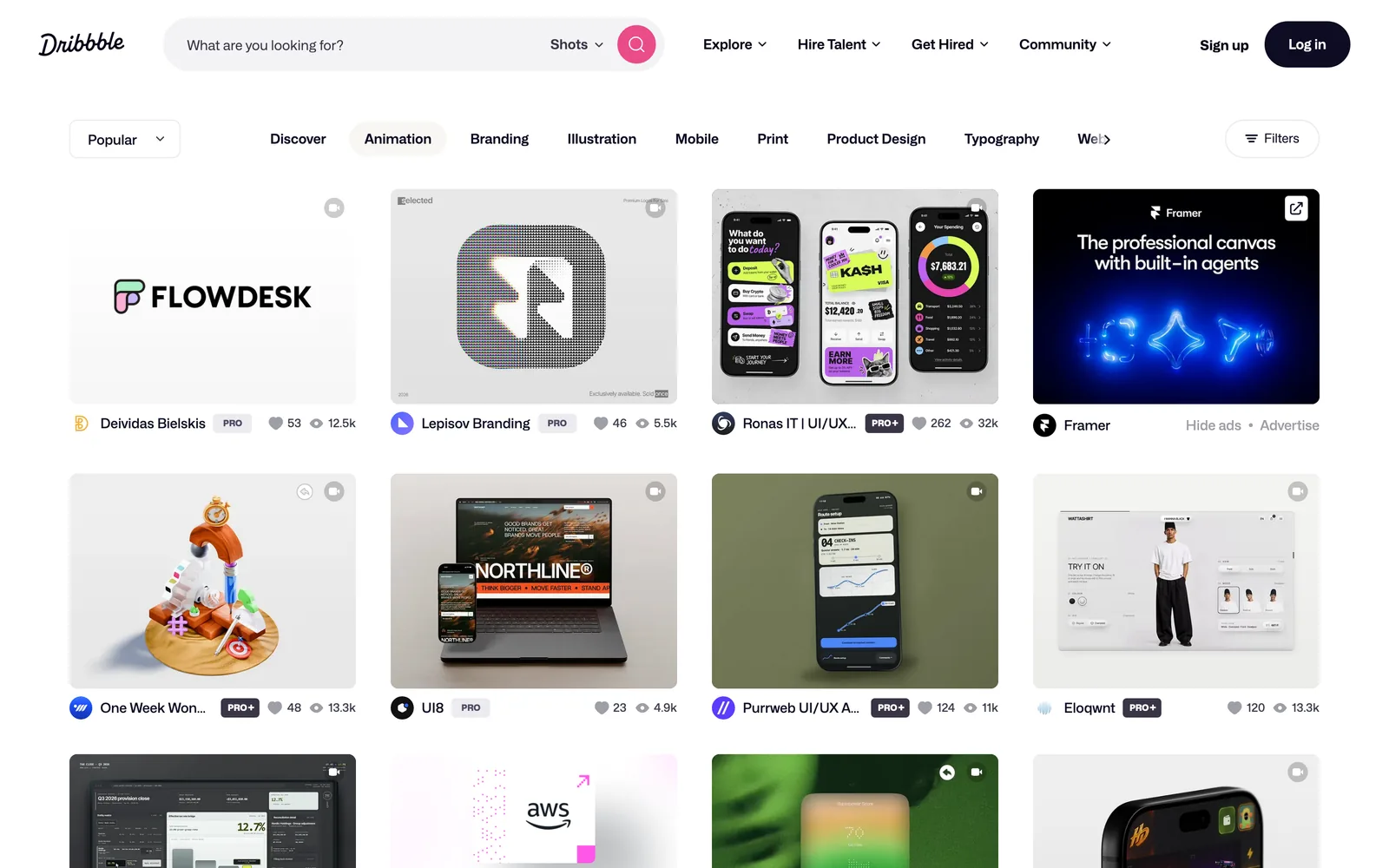
Dribbble filtered to Animation is mostly product and UI motion, logo reveals and short brand loops. That's exactly right if your work lives in apps and websites, and less useful for broadcast or film. For UI motion, LottieFiles is the useful companion: its free library holds lightweight animations you can open, inspect and pick apart to see how the timing was built.
Eyecandy: look up a technique by name
Eyecandy calls itself a visual technique library, and it's the most useful site on this page when you know what you want but not where to find it. Every clip is filed under a technique: datamosh, morphing, kaleidoscope, match cut, infinite loop, double exposure, dolly zoom, motion blur and dozens more. It's free, with no account.
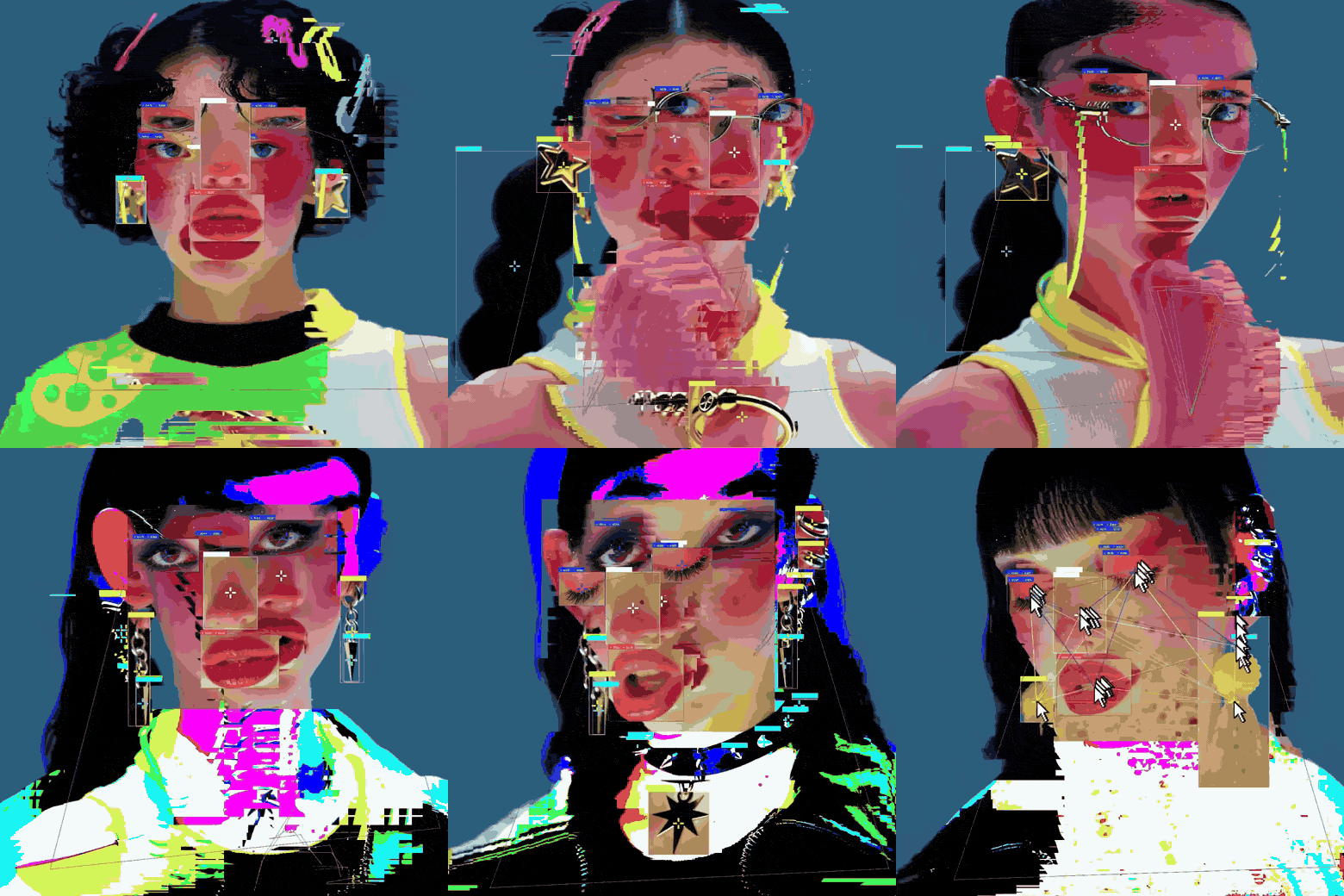
It's built for the moment in a call when someone says "you know that thing where the image melts into the next one?" Search the technique, send three links, move on. Pair it with a tag of your own for the same technique in your library, so you don't have to look it up twice. Our guide to tagging video references has a starter list.
Sakugabooru and Cartoon Brew, for animators
Sakugabooru is a community archive of short clips of standout 2D animation, mostly Japanese, tagged by show, effect and, where it's known, the key animator who drew each cut. When we opened it, the post list ran to more than 4,600 pages. It's free and funded through Patreon. If you study effects, smears or character acting, it's the best free source going, and it's the backbone of our guide to building an animation reference library.
Cartoon Brew is the news side of animation: festival results, studio tours, features and short film premieres, free to read. It's more industry than inspiration, but its short film posts are a reliable feed of animated work you won't see elsewhere.
Awards lists: let a jury do the filtering
The Motion Awards, run by Motionographer, publish their winners free, sorted by discipline: commercial, title sequence, infographics, gaming, sports, AI and more. The 2025 list honours 31 works across 15 disciplines, from Elastic's Shogun titles to Tendril's Hublot spots, and not every category gets a winner, which tells you the bar is real. Entries for the current edition close on 15 January 2027 and cost $398 at the time of writing ($198 for students).
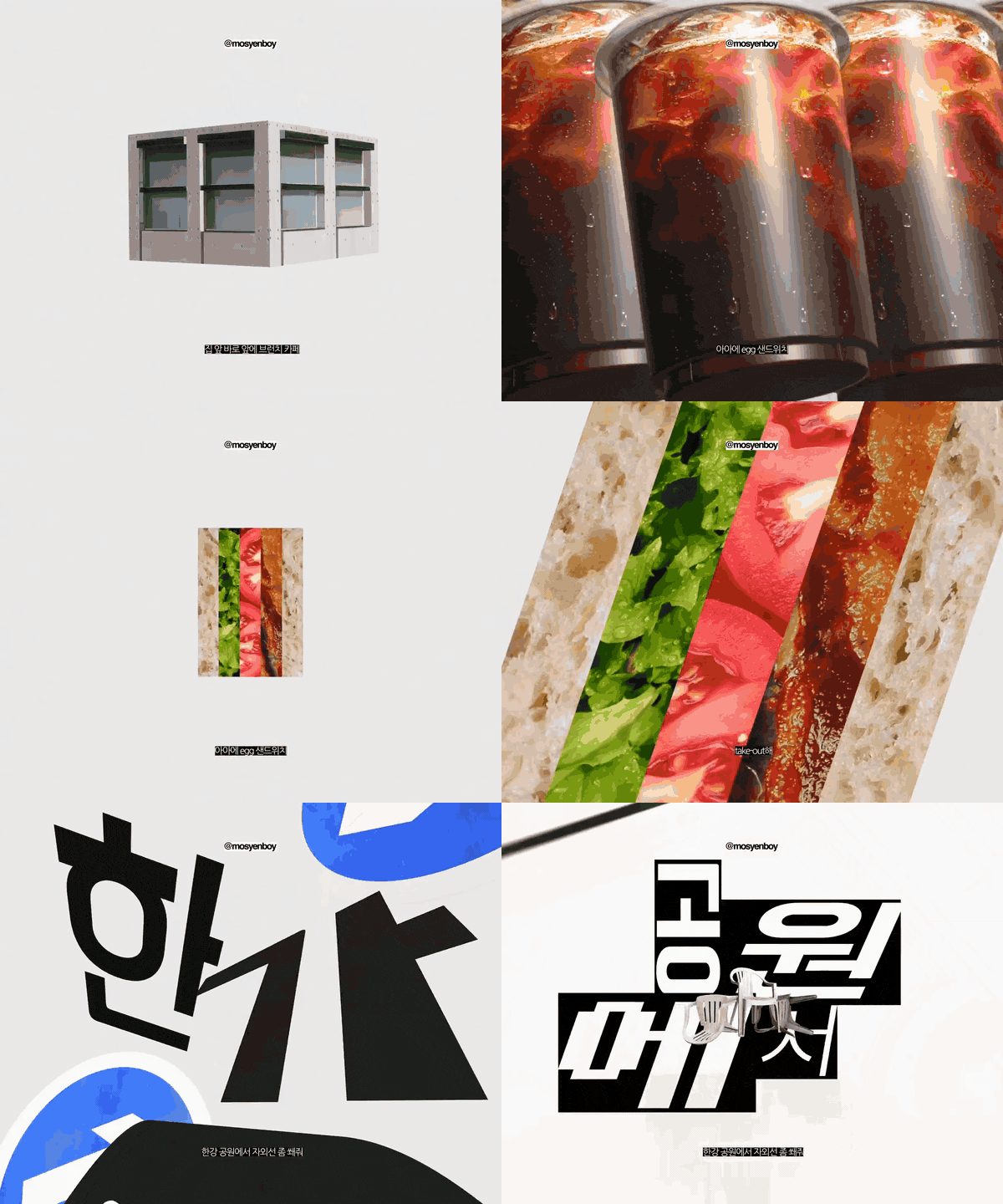
Annecy is the big animation festival, and its winners list (in French by default) includes a prize for commissioned films, meaning ads, music videos and brand work, beside the shorts and features. The next festival runs from 13 to 19 June 2027.
Studio sites: watch one team across twenty briefs
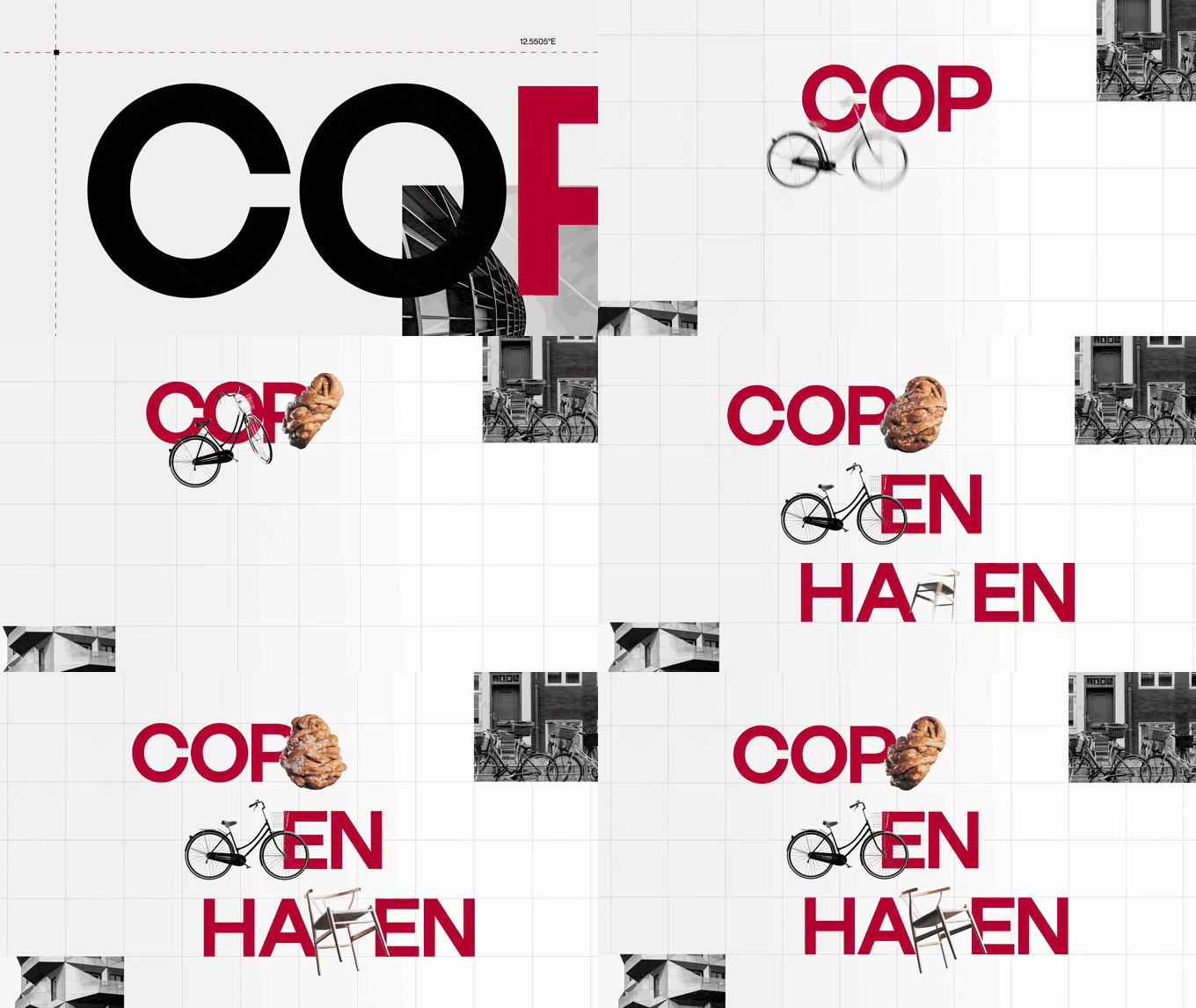
The best motion design inspiration on the web is free and sits on studios' own sites. One piece tells you a team can do one thing. Twenty pieces tell you how they think. A good starting set: BUCK, Oddfellows (who made the Figma film in the header above), Gunner, ManvsMachine, Golden Wolf, Giant Ant, Ordinary Folk and Animade.

Social feeds are where much of this work appears first, especially Instagram, where studios and solo animators post loops and works in progress. The trouble is keeping them. Our guide to saving Instagram reels for inspiration explains where the Saved tab lets you down, and our Pinterest alternatives list covers the calmer places to browse.
Keeping the motion work you find
Every site above is somewhere to look. None of them is somewhere to keep. Motionographer is a magazine, STASH's archive sits behind its own login, and a Vimeo film that goes private next year takes your reference with it. So pick one place for your team's references and move the good ones there the day you find them, with a note on why.
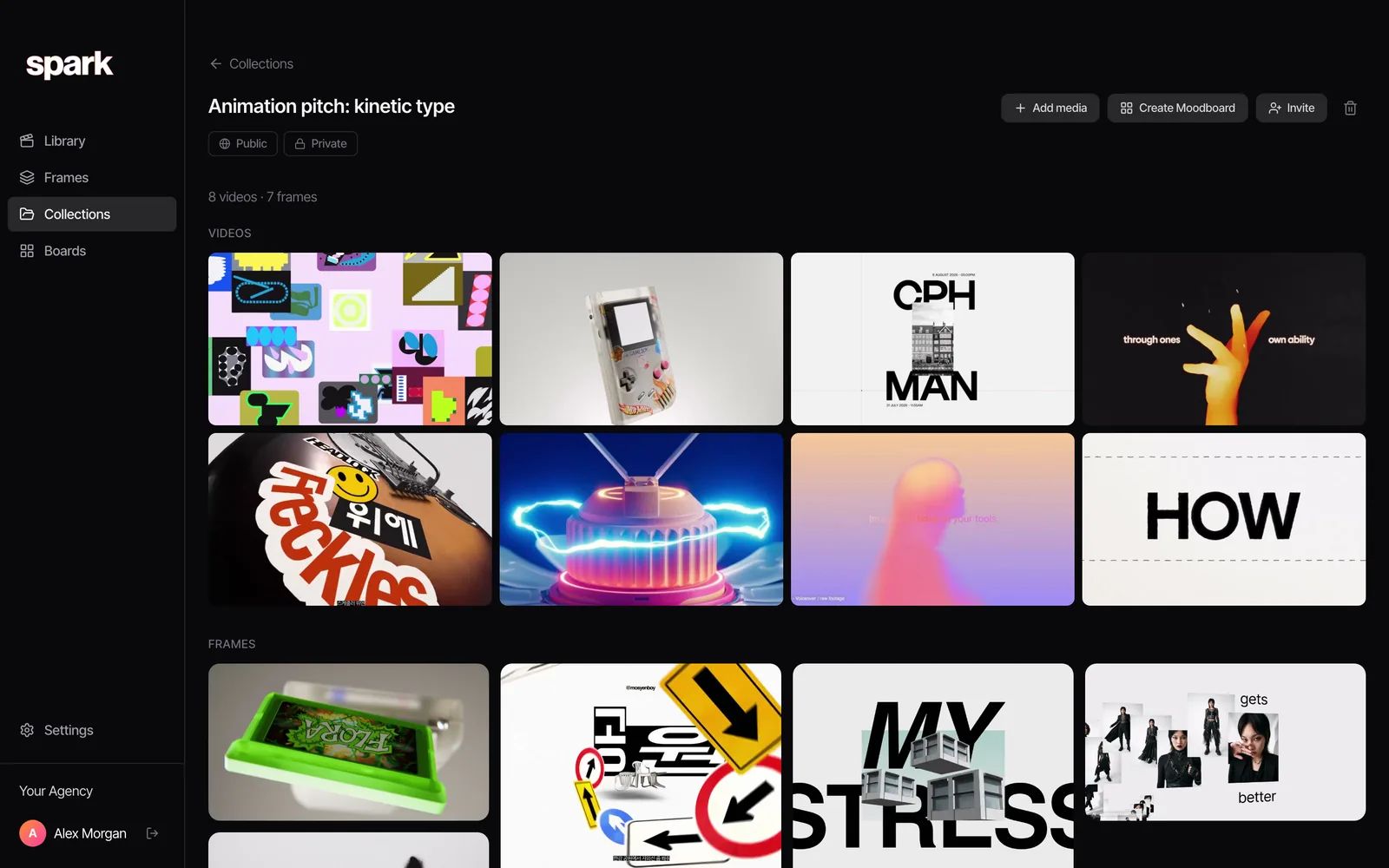
That's what we built Spark for. Most motion posts embed the studio's own Vimeo or YouTube film, so paste that original link into Spark and it saves the video with its source. Paste an Instagram, TikTok, Pinterest or YouTube link the same way. Behance and Dribbble aren't video sources, so right-click a still or a GIF there with the Chrome extension to save it to Frames, and use the built-in screen recorder for anything that won't save. For paid libraries like STASH, respect their terms: keep the link and your note, and save the studio's public upload if there is one.
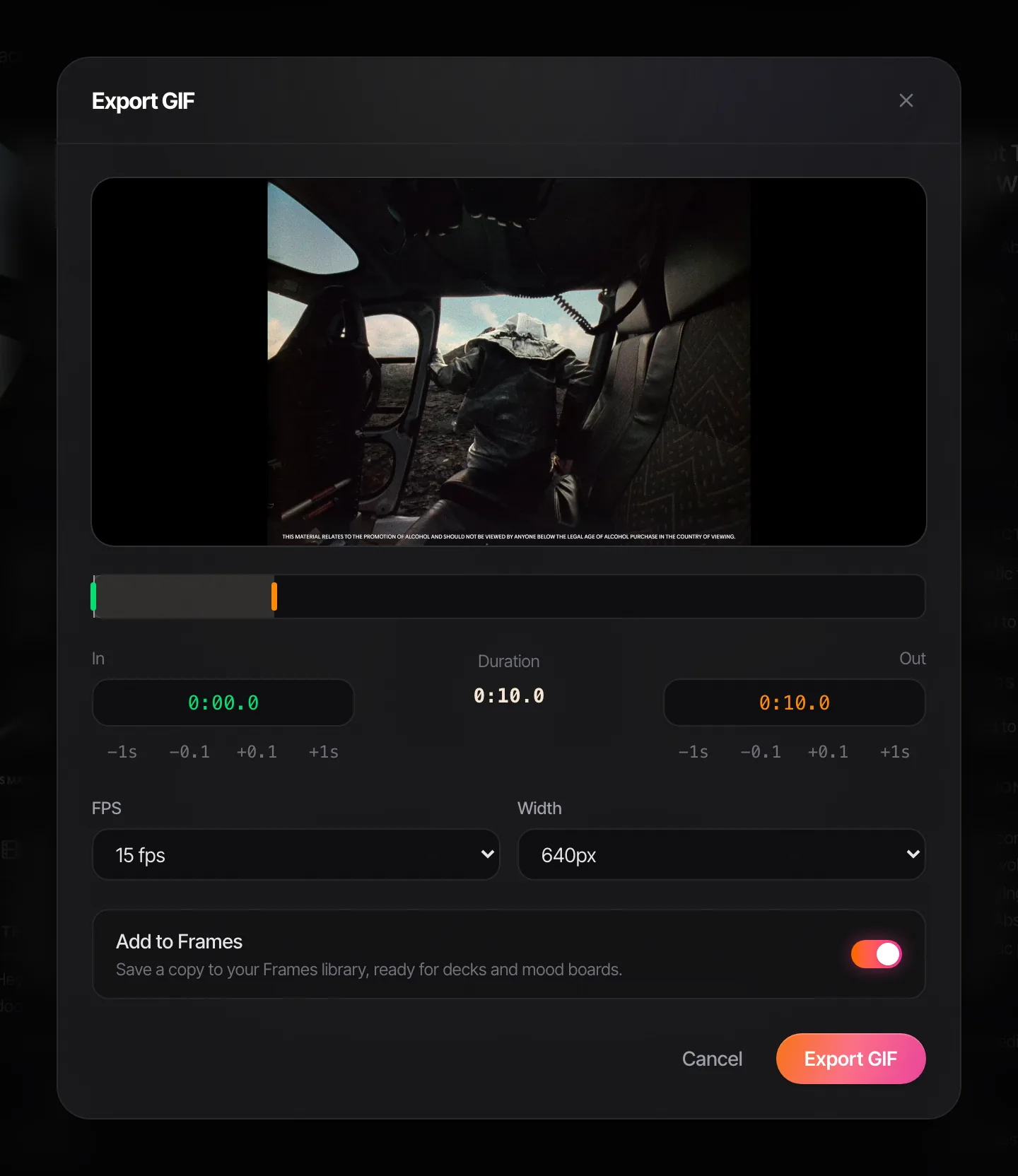
Then cut the moment you mean. Spark's player steps one frame at a time with comma and full stop, and on Creator and Studio, Export GIF trims the exact move into a loop for the deck. Our guide to exporting GIFs from After Effects covers the same job for your own renders.
References are for internal research and pitching. Credit the studio, keep other people's work out of anything public, and ask before you use it anywhere a client's audience will see it.
For loops from your own renders, or files you're allowed to use, our free video to GIF converter runs in the browser with frame accurate in and out points.
FAQs
What is the best website for motion design inspiration?
For a free daily feed, Motionographer. For depth, STASH, whose Permanent Collection costs $9.99 a month or $99 a year as of October 2026. Most motion designers use one of each, plus Behance for process and studio sites for whole reels.
Is STASH worth paying for?
If motion design or animation is your job, usually yes: the Permanent Collection is a searchable archive of finished work with full credits, and the yearly plan is $99. Try the 7 day free trial with a real brief before you pay. If you only need the odd reference, Motionographer and Behance are free.
Why can't I see Vimeo Staff Picks in the UK?
Since late 2024, Vimeo hasn't shown curated pages such as the Staff Picks channel to viewers in the UK and EU, citing local regulations. The channel now redirects to a European Film Academy page. Individual Vimeo videos still play from a direct link, and Short of the Week is a good UK friendly source of animated shorts.
Where can I find style frames for motion design?
Behance's Motion gallery has a Styleframing category where studios post the frames and boards behind their films. Art of the Title features often include early frames too. Our guide to making style frames explains how to build your own from references.
What's a good site for 2D animation reference?
Sakugabooru is the best free source for 2D animation clips, tagged by show, effect and, where known, the animator who drew each cut. Cartoon Brew covers the industry news, and the Annecy festival's winners list points you to the year's best animated shorts, features and commissioned films.
Can I use motion design I find online in a pitch?
As internal reference in a pitch or treatment, it's standard practice, but the copyright stays with the studio and the client. Credit the makers, keep it out of anything public, and never present it as your own. If a reference needs to appear somewhere public, ask the studio first.
Keep reading
All articles
Best Websites for Commercial Film Inspiration in 2026
Every site on this list was checked in October 2026. Some are free, some cost real money, and a couple are only worth it if you know exactly what you're hunting for.

How to Find Examples of Match Cuts and Creative Transitions
The bone and the spacecraft, the match and the sunrise, the scream and the train whistle. The great match cuts by type, who cut them, and how to build your own collection.
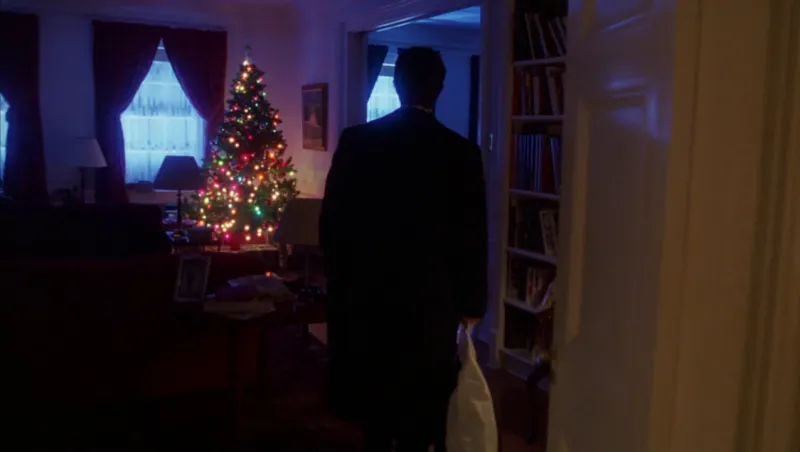
How to Build a Lighting Reference Library for Film Shoots
A folder called "Eyes Wide Shut" won't help on the tech recce. Here's how to read light from a frame, file it by setup, and hand a gaffer something they can use.