Day Rate to Salary: What a UK Freelance Day Rate Is Really Worth
£400 a day sounds like £90,000 a year. After the days nobody pays for, the costs and the tax, it's worth about the same as a £57,300 salary. Here's the maths, both ways.
By the Spark team ·
To turn a UK day rate into a salary, multiply it by the days you'll really bill, take off your business costs and tax, and find the salary that leaves an employee the same take-home. At £400 a day, 159 billable days and £7,560 of yearly costs, a sole trader keeps £43,791 after 2026/27 income tax and National Insurance. That's the same take-home as a salary of about £57,300. Going the other way, matching the take-home of a £50,000 salary takes about £400 a day.
The quick shortcut, £400 times the 227 working days in a year, says £90,800. It overstates the answer by more than half, because it assumes every working day is paid and forgets that freelancers buy their own laptop, pension and holidays.
Spark's founder spent more than ten years running a London production company, hiring both staff and freelancers, and we built the free UK freelance day rate calculator that every figure here comes from. All the tax figures are for a sole trader in England, Wales or Northern Ireland in the 2026/27 tax year, checked on GOV.UK on 24 October 2026. It's an illustration, not financial advice: for your own position, ask an accountant.
Step 1: Count the days someone pays for
A five day week gives 260 weekdays. An employee in the UK is entitled to 5.6 weeks of paid holiday, which for a five day week is 28 days including bank holidays. Take those off, plus a few sick days, and you get the calculator's starting point:
- 260 weekdays
- minus 20 days of holiday and 8 bank holidays (England and Wales)
- minus 5 sick days
- = 227 working days
You won't bill all 227. Some go on quoting, invoicing, pitching and the gap between one job ending and the next starting. The calculator's default is 70% billable, which is 158.9 days, and its own guidance suggests nearer 50% if you're new. We show 70% and 60% (136.2 days) below.

Step 2: Take off your business costs
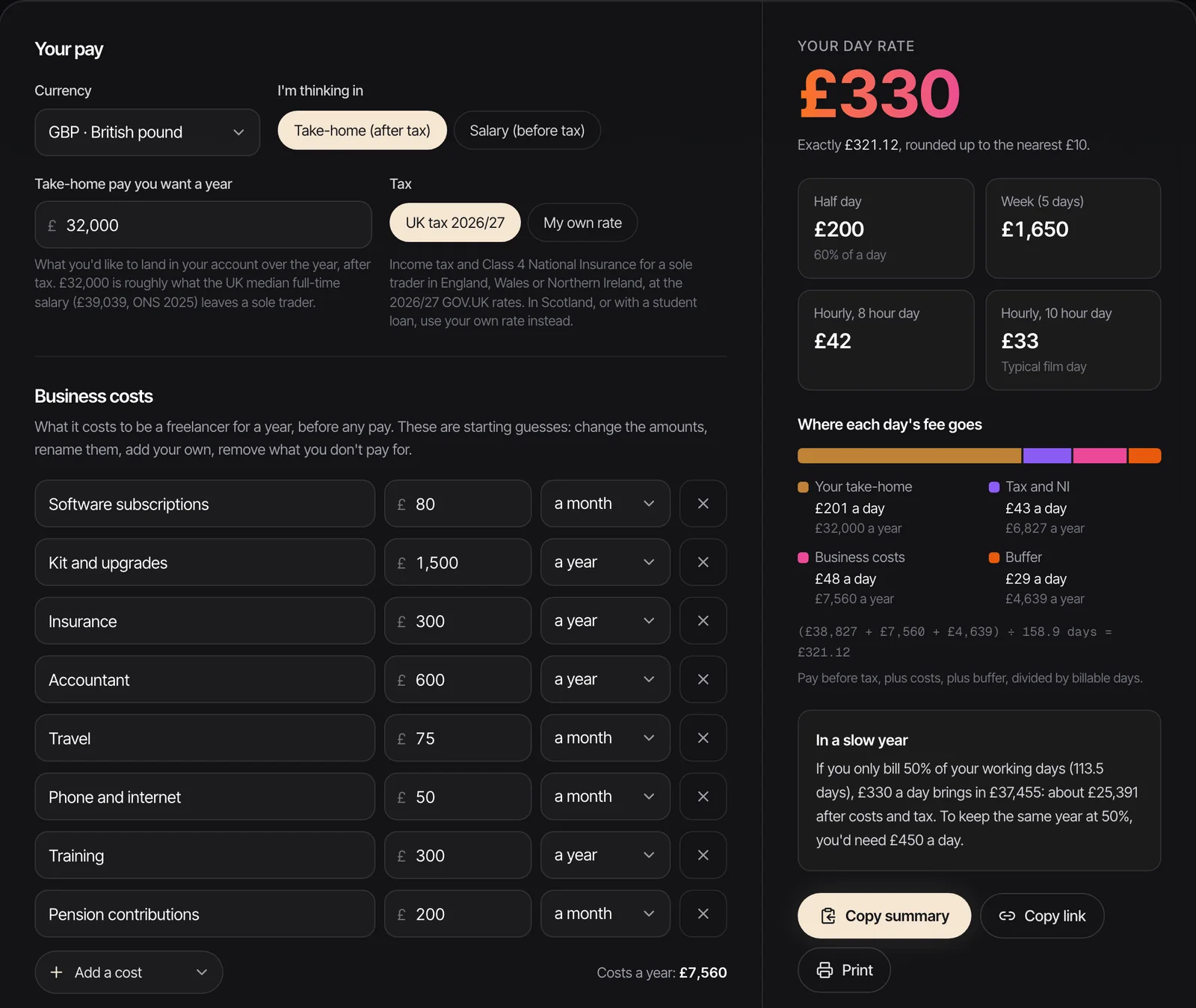
A salary arrives with a desk, a computer and a software licence attached. A day rate doesn't. The calculator starts with eight typical costs for a creative freelancer working from home:
| Cost | A year |
|---|---|
| Software subscriptions (£80 a month) | £960 |
| Kit and upgrades | £1,500 |
| Insurance | £300 |
| Accountant | £600 |
| Travel (£75 a month) | £900 |
| Phone and internet (£50 a month) | £600 |
| Training | £300 |
| Pension contributions (£200 a month) | £2,400 |
| Total | £7,560 |
These are starting guesses, not averages. A videographer with a camera package or a 3D designer with a render machine will spend more; our videographer and motion designer rate guides show what that does to the number. Camera crew have their own anchors, set out in DoP day rates.
Step 3: Take off the tax
What's left after costs is profit, and that's what a sole trader is taxed on. The rates for 6 April 2026 to 5 April 2027, from GOV.UK's income tax rates, self-employed National Insurance and employee National Insurance pages:
| Band of income or profit | Income tax | Sole trader NI (Class 4) | Employee NI |
|---|---|---|---|
| Up to £12,570 | 0% | 0% | 0% |
| £12,571 to £50,270 | 20% | 6% | 8% |
| £50,271 to £125,140 | 40% | 2% | 2% |
| Over £125,140 | 45% | 2% | 2% |
The Personal Allowance shrinks by £1 for every £2 of income over £100,000. Scotland has its own income tax bands, and student loan repayments come on top, so if either applies, use your own tax rate in the calculator.
Notice the National Insurance column. On the same income, a sole trader pays 6% where an employee pays 8%. That's why a salary equivalent always comes out a little higher than the freelancer's profit.
Step 4: Find the salary with the same take-home
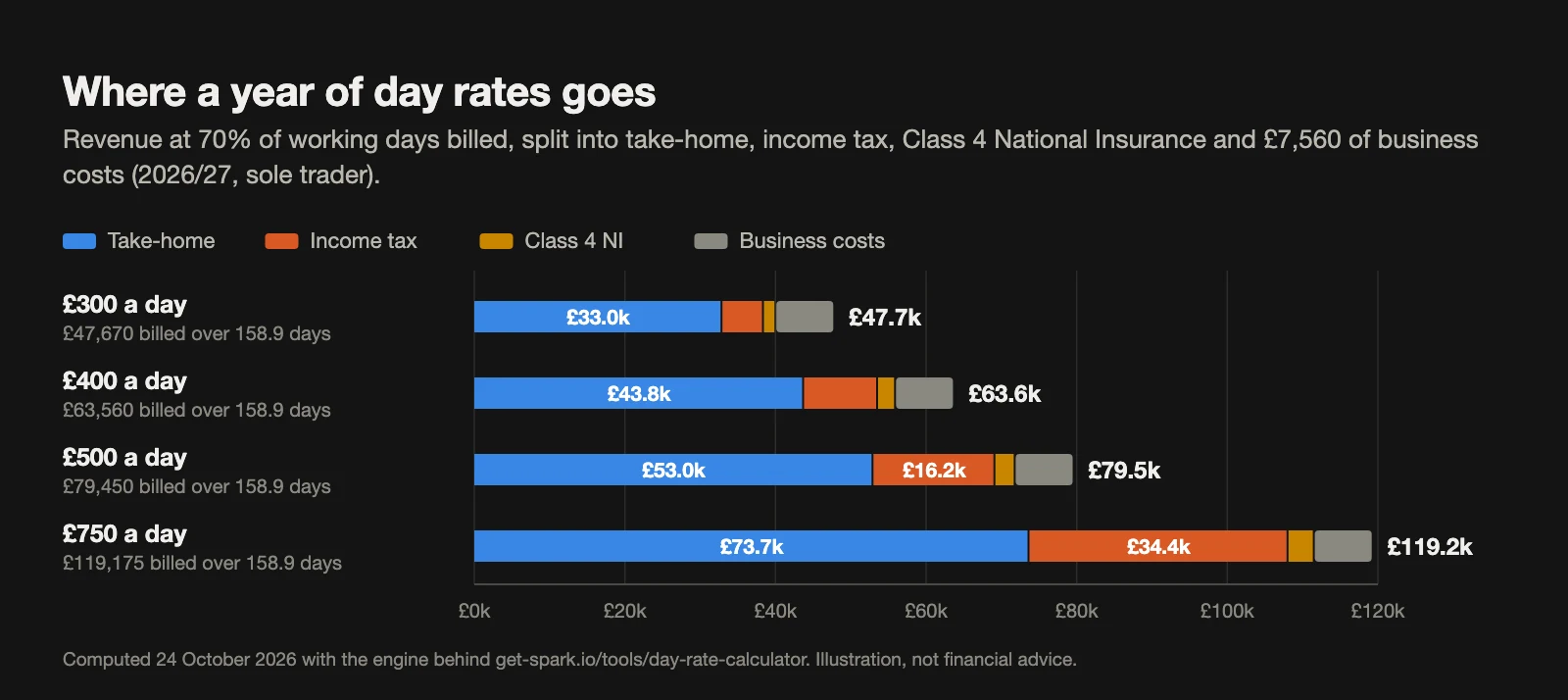
Now ask which employee salary leaves the same money in your account after income tax and employee National Insurance. Here's that answer for ten day rates, at both billable shares, after £7,560 of costs. Figures are pounds a year, rounded to the nearest £100.
| Day rate | Billed a year at 70% (158.9 days) | Take-home | Salary equivalent at 70% | Salary equivalent at 60% (136.2 days) |
|---|---|---|---|---|
| £200 | 31,800 | 21,200 | 24,500 | 19,900 |
| £250 | 39,700 | 27,100 | 32,700 | 26,900 |
| £300 | 47,700 | 33,000 | 40,900 | 33,900 |
| £350 | 55,600 | 38,800 | 49,000 | 40,900 |
| £400 | 63,600 | 43,800 | 57,300 | 47,900 |
| £450 | 71,500 | 48,400 | 65,200 | 55,000 |
| £500 | 79,500 | 53,000 | 73,200 | 61,800 |
| £600 | 95,300 | 62,200 | 89,100 | 75,500 |
| £750 | 119,200 | 73,700 | 113,600 | 95,900 |
| £1,000 | 158,900 | 92,800 | 152,800 | 130,100 |
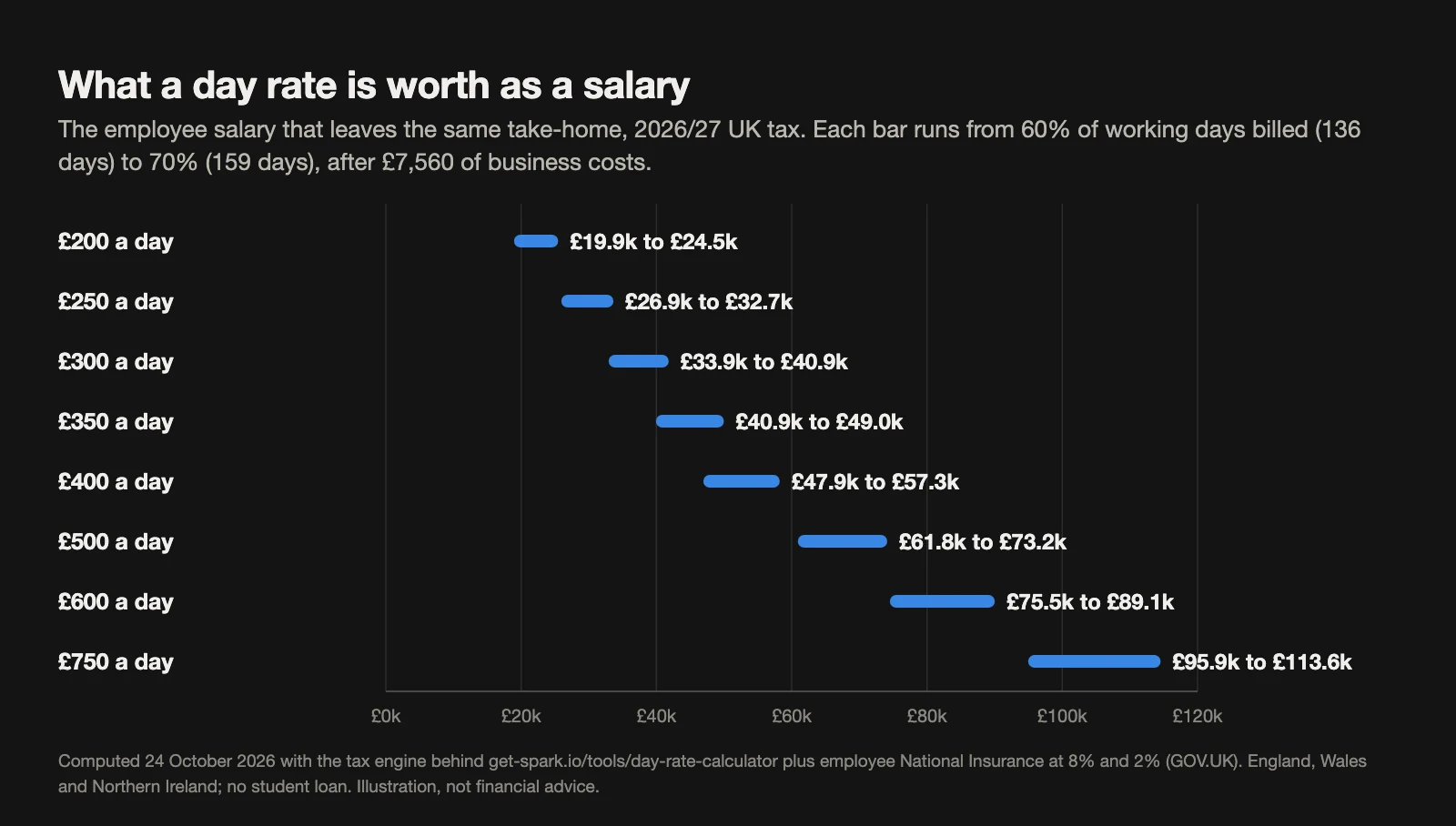
Two things stand out. First, a day rate is worth roughly 120 to 155 times itself as a salary at 70% billable (£400 a day is about £57,300), and 100 to 130 times at 60%, not the 227 a straight multiplication suggests. Second, the billable share moves the answer more than the rate does at the low end: £350 a day at 60% is worth exactly what £300 a day is at 70%.
The other way: salary to day rate
Going from salary to day rate is what the calculator does by default. Start with the salary, work out what an employee would take home, then gross that up for a sole trader and add costs and a buffer:
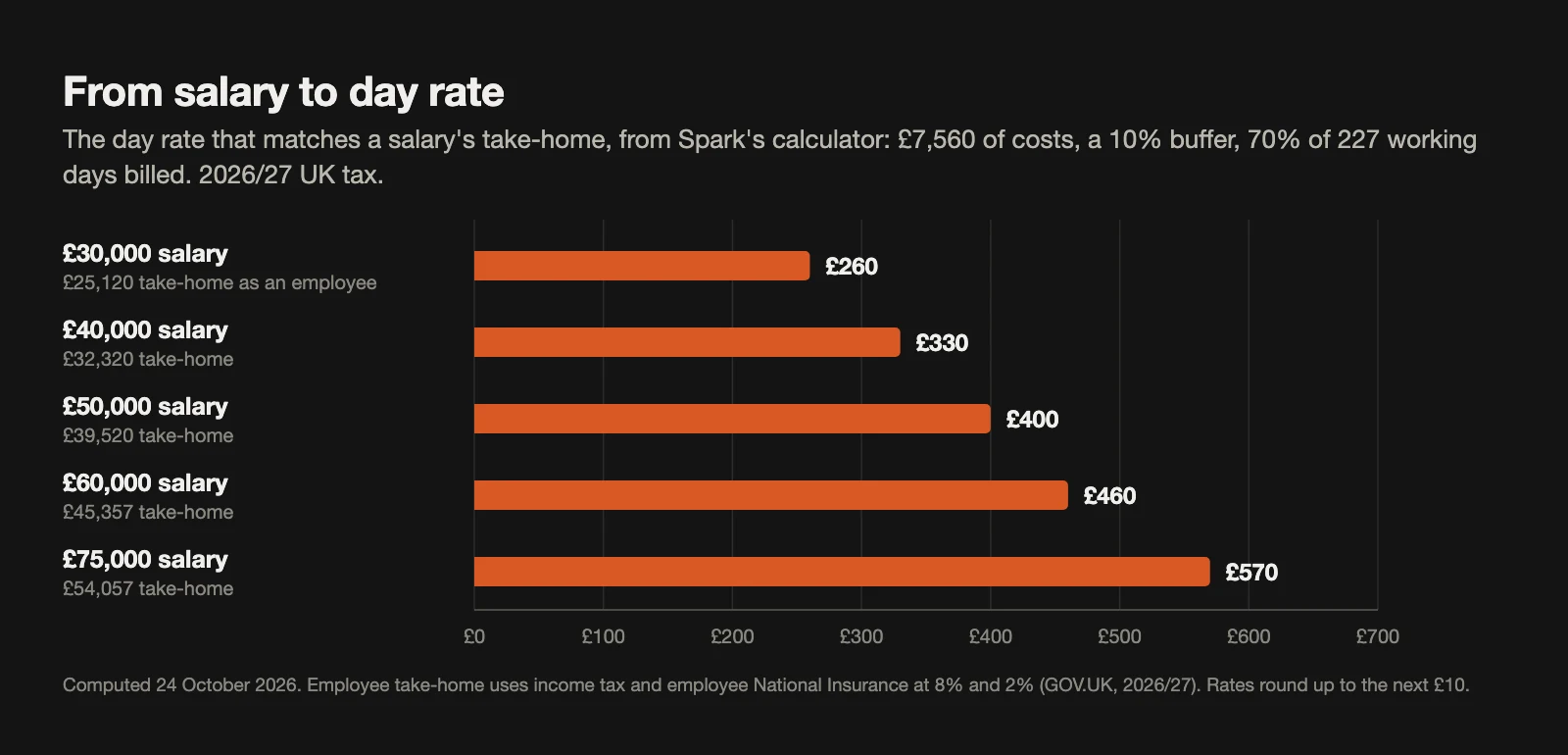
That's why £50,000 becomes £400 a day, but £400 a day comes back as £57,300: the trip out adds a 10% buffer for late payers, quiet months and a bit of profit, and the trip back assumes every penny billed is earned. If you'd rather not count the buffer, set it to 0% in the calculator.
The calculator also has a "Salary (before tax)" mode. It treats the salary you type as the profit you need before tax, which is slightly generous, because a sole trader pays less National Insurance than an employee on the same figure. For a £50,000 salary both modes land on £400 a day; at £75,000 the salary mode asks for £580 and the take-home mode £570.
What a salary includes that a day rate has to pay for
A salary isn't only the number on the contract. An employee also gets:
- Paid holiday: at least 28 days a year for a five day week.
- A pension contribution: under automatic enrolment the employer pays at least 3% of earnings between £6,240 and £50,270. On a £50,000 salary that's £1,312.80 a year. (Our cost list has £2,400 a year of pension for the freelancer, which is more than the employer minimum.)
- Sick pay, the laptop, the software and the desk, which in our method are the sick days and the business costs.

If you're on the other side, hiring, the comparison runs the other way too. A £50,000 employee costs their employer more than £50,000: employer National Insurance is 15% of earnings above £5,000 a year (£6,750), plus at least £1,312.80 of pension, before a desk or a laptop. That's £58,062.80 a year for 227 working days. A freelancer at £400 a day costs £63,560 for 158.9 days, and you only pay for the days you use.
Where IR35 fits
Briefly, because it's about freelancers who work through a limited company. IR35, the off-payroll working rules, apply when a worker provides services through their own intermediary, usually a limited company, to a client they'd be an employee of if they were hired directly. When they apply, the worker pays broadly the same income tax and National Insurance as an employee. For public sector clients and medium or large private ones, the client decides whether the rules apply.
If you invoice as a sole trader, you don't have an intermediary, so IR35 itself isn't the issue. Your employment status for tax still depends on how you work, and HMRC's Check Employment Status for Tax tool gives HMRC's view on a specific engagement.
One more threshold: once your taxable turnover passes £90,000 in a rolling 12 months, you have to register for VAT. In the table above, that's somewhere between £550 and £600 a day at 70% billable.
Check your number against the market
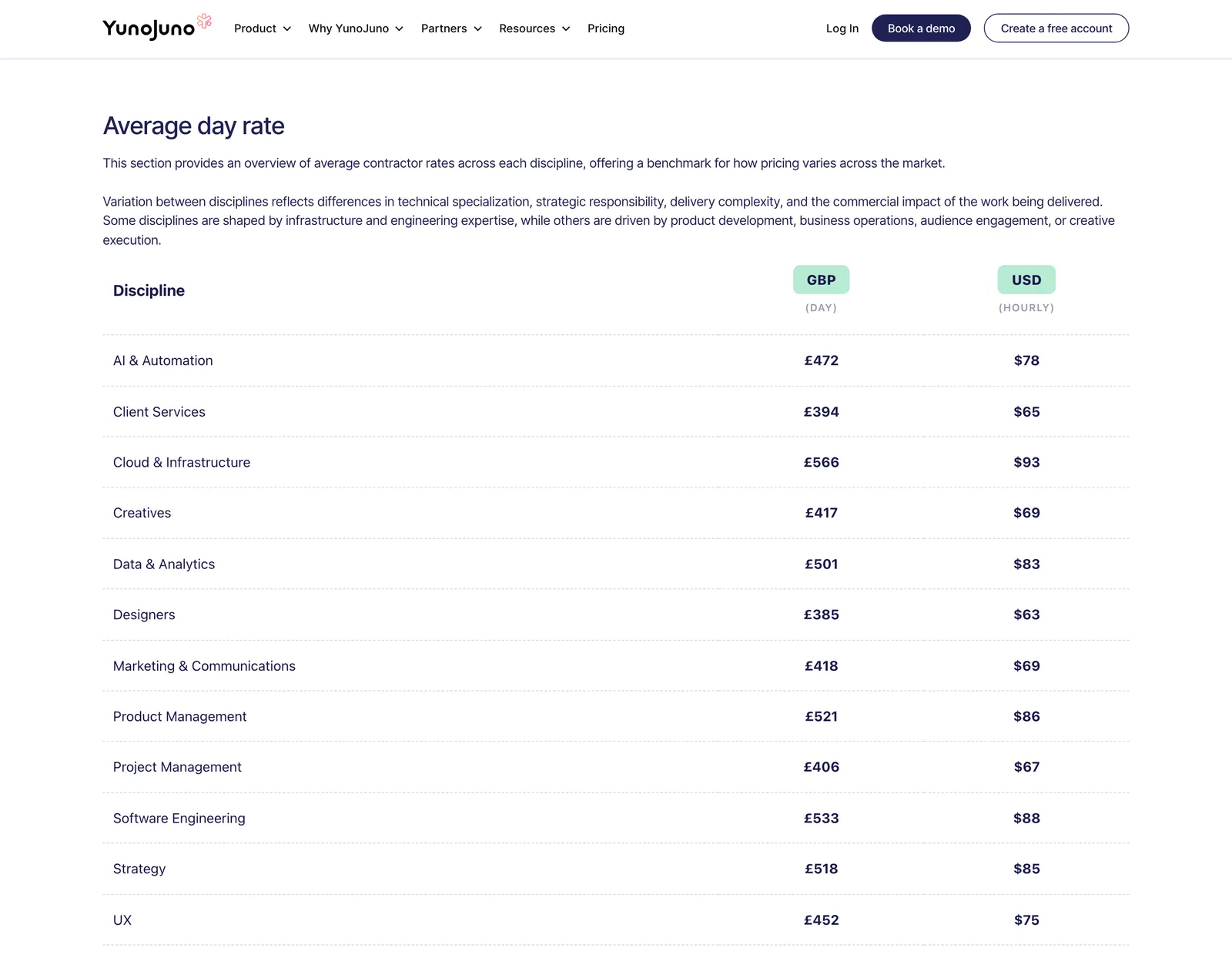
The maths tells you what a rate is worth. It doesn't tell you what clients pay. For creative roles, YunoJuno's 2026 rates report puts the average UK day for its Creatives category at £417 and Designers at £385, from bookings on its platform. At 70% billable and our costs, £417 a day is worth a salary of about £60,000.
For your own role, our guides to videographer day rates and motion designer day rates collect the published figures, and the method for calculating a day rate goes step by step through building your own.
Spend the billable days on the work
The quickest way to raise the value of a day rate is to bill more of your days, and the quickest way to lose billable time is hunting for things. Agencies that book freelancers by the day tend to keep shared reference libraries for exactly this reason, and if your team's references live in chat threads, here's how to stop them getting lost in Slack. For finding new ones, start with these commercial film inspiration sites.

Spark won't change your tax bill. It might give you back a few of those 227 days.
FAQs
How do I convert a day rate to an annual salary in the UK?
Multiply the day rate by the days you'll really bill (about 159 at 70% of 227 working days), subtract your business costs, then take off income tax and Class 4 National Insurance. The salary equivalent is the employee salary that leaves the same take-home. At £400 a day and £7,560 of costs, that's about £57,300 for 2026/27.
What is £400 a day as a salary?
At 70% of working days billed and £7,560 of business costs, £400 a day brings in £63,560 a year and leaves £43,791 after 2026/27 tax for a sole trader. That's the same take-home as a salary of about £57,300. At 60% billable it's about £47,900.
How do I convert a salary into a day rate?
Work out the employee's take-home, gross it up for a sole trader's tax, add your yearly business costs and a buffer, then divide by your billable days. Matching a £50,000 salary takes about £400 a day at 70% billable with £7,560 of costs and a 10% buffer. Spark's free day rate calculator does this live.
How many days a year does a freelancer work in the UK?
A five day week has 260 weekdays. Taking off 28 days of holiday and bank holidays and 5 sick days leaves 227 working days. Freelancers rarely bill all of them: 70% is 158.9 days and 60% is 136.2.
Does IR35 apply to sole traders?
IR35, the off-payroll working rules, applies when someone works through their own intermediary, usually a limited company. A sole trader has no intermediary, so the rules themselves don't apply, but employment status for tax still depends on how you work. HMRC's Check Employment Status for Tax tool gives its view on a specific engagement.
Is a freelance day rate better than a salary?
Not automatically. In our table, £300 a day at 60% billable is worth about the same as a salary in the low thirty thousands, before counting the employee's paid holiday, sick pay and employer pension. A day rate pays better once it's high enough to fund all of that and you can keep your diary full.
Keep reading
All articles
How to Extract a Still Frame From a Video (Mac, Windows, Premiere, Resolve)
A screenshot of a paused video is the quick way, and usually the wrong one. Here's how to get the real frame, at the video's real resolution, in whatever you have open.
How to Build a Video Ad Swipe File That Your Team Actually Uses
Saving an ad takes ten seconds. The swipe files that get used are the ones where someone can find the right opening months later, without remembering who made it.

How to Use ChatGPT and Claude for Creative Research (and With Your Reference Library)
An AI chat is a brilliant vocabulary partner and an unreliable librarian. Use it for the first job and it saves hours. Trust it with the second and you'll be hunting for films that were never made.