
Cinematographer and DoP Day Rates in the UK (2026)
A DoP's rate is the most negotiated number on a crew list, and the least published. Here's what the APA and Bectu do publish, what changes between drama, commercials and corporate, and the lines people forget to charge.
By the Spark team ·
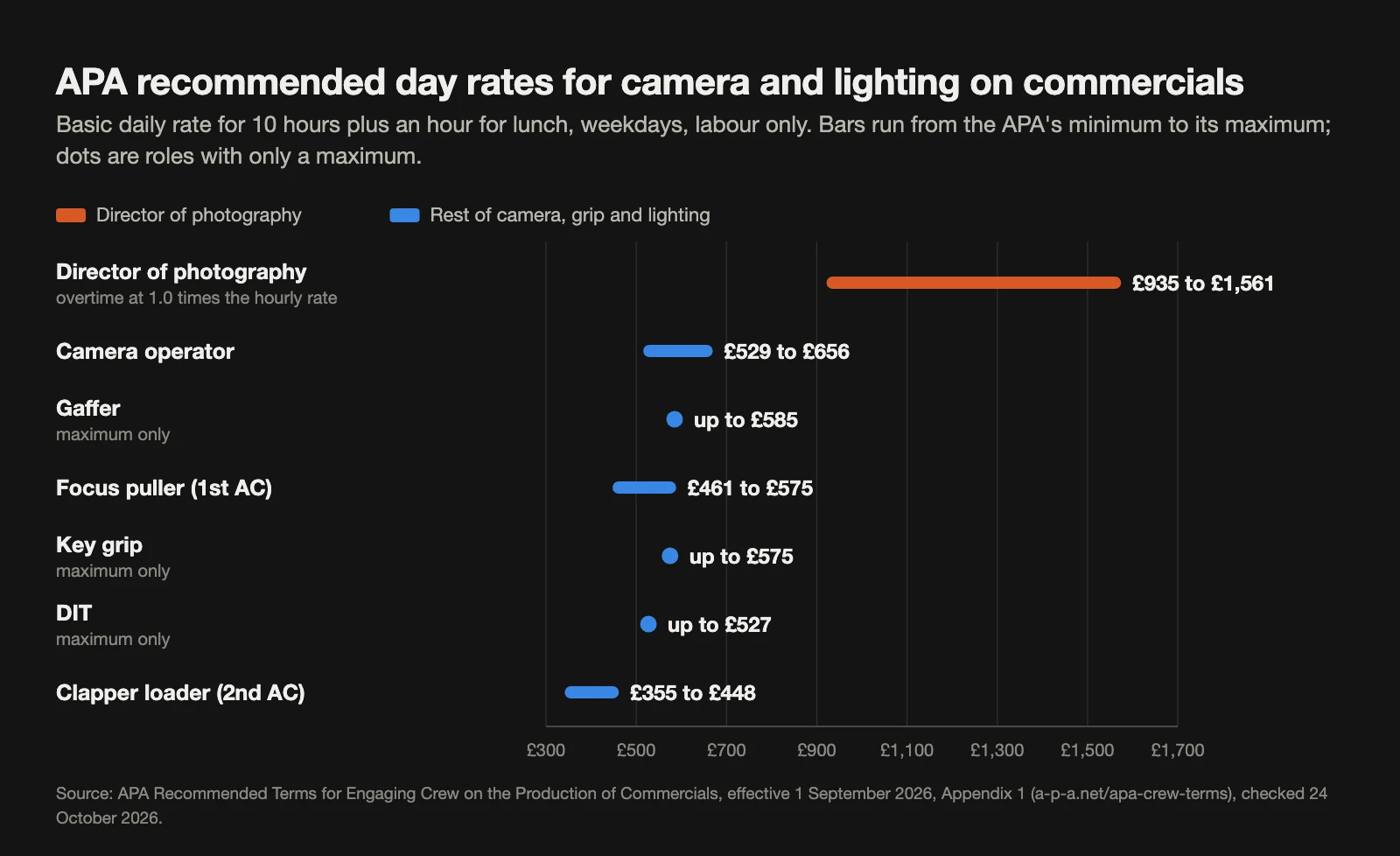
On UK commercials, the APA's recommended crew terms from 1 September 2026 put a director of photography's basic day at £935 to £1,561, for 10 hours plus lunch, labour only. In film and TV drama there's no published figure: Bectu's camera branch rate card lists the cinematographer as individually negotiated in every budget band, while the camera operator working for them gets £563 to £808 for a 10 hour day. Corporate work has no card at all, so it's priced from the freelancer's own floor and the client's budget.
Those three worlds price the same job very differently, and the gaps between them are where quotes go wrong: prep and recce days, travel, overtime, weekends and kit.
Spark's founder spent more than ten years running a London production company, booking DoPs for commercials and branded films, so this guide is written from the side of the table that reads the quotes. Every figure links to its source and was checked on 24 October 2026. It isn't financial or legal advice; for your own position, ask an accountant.
Commercials: the APA crew terms
The Advertising Producers Association publishes recommended terms for engaging crew on UK commercials; the current version took effect on 1 September 2026. The document describes them as the APA's recommended terms and an agreement with Bectu, and Bectu's own rate cards point commercials crew to them.
What the APA terms say about a DoP's day, beyond the rate:
- The day is 10 hours plus an hour for lunch. Overtime starts after 11 hours from call. APA members are asked not to schedule shoot days beyond 12 hours except in exceptional circumstances.
- A DoP's overtime is paid at 1.0 times the basic hourly rate, which is a tenth of the day rate. On a £1,200 day that's £120 an hour. Lower day rates get 1.25 or 1.5 times; every grade gets triple time after midnight.
- Weekends cost more. A Saturday shoot day is 1.5 times the basic daily rate. A Sunday or bank holiday is double the hourly rate for every hour worked, with a 10 hour minimum.
- Nights (a call time between 5pm and 5am) are double the hourly rate for every hour, with a 10 hour minimum.
- Holiday pay is included. The terms say crew payments include a payment in lieu of 12.07% holiday entitlement.
Drama and features: individually negotiated
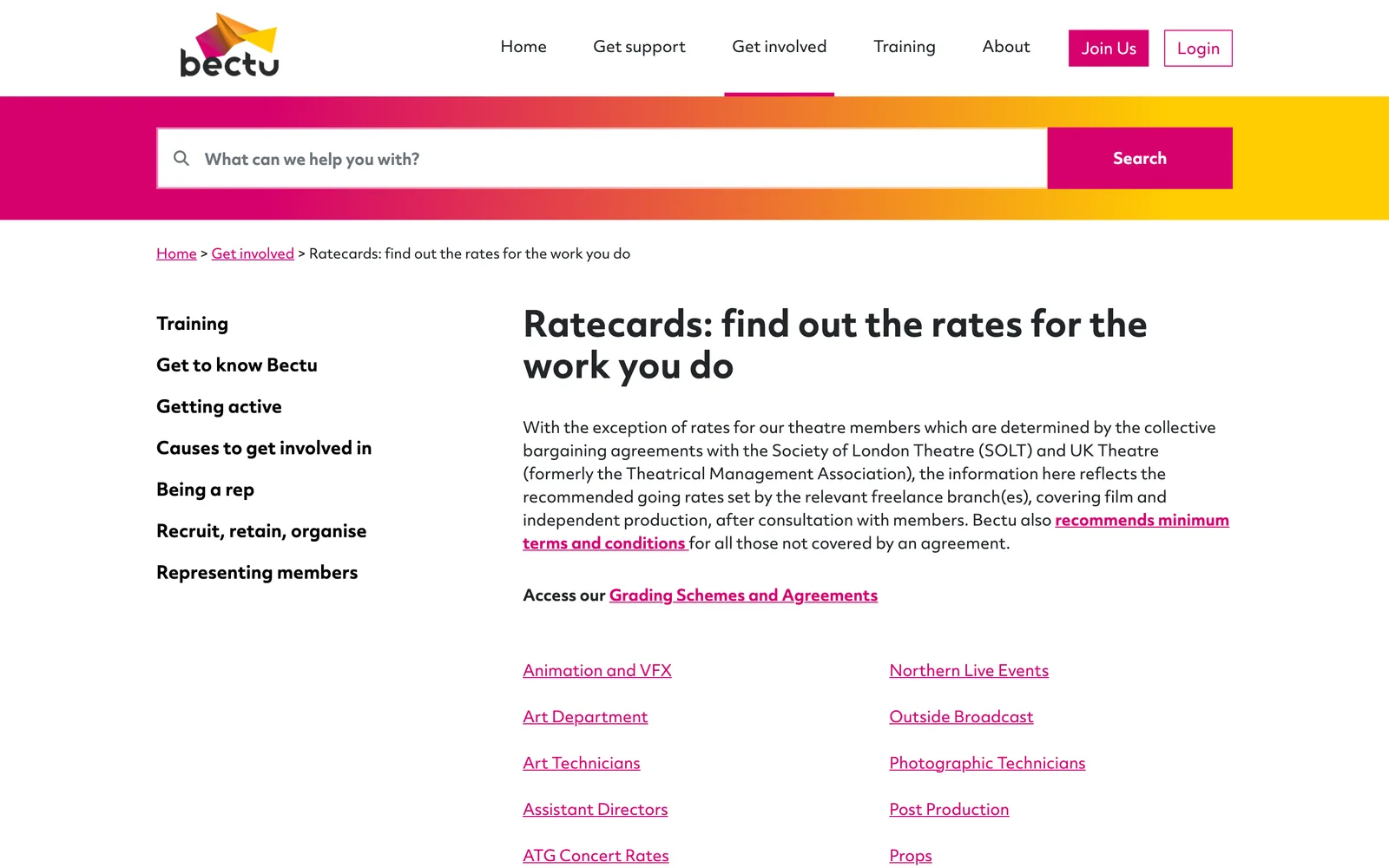
Bectu's camera branch publishes a rate card for film and TV drama, based on the Pact/Bectu TV Drama Agreement 2023 and the Major Motion Picture Agreement 2021. Every column, from TV dramas under £1m an hour to features over £30m, lists the cinematographer as "Ind. Neg.": individually negotiated. The card publishes rates for everyone under the DoP instead.
The camera operator's line is the best public signal of how the department scales with budget:
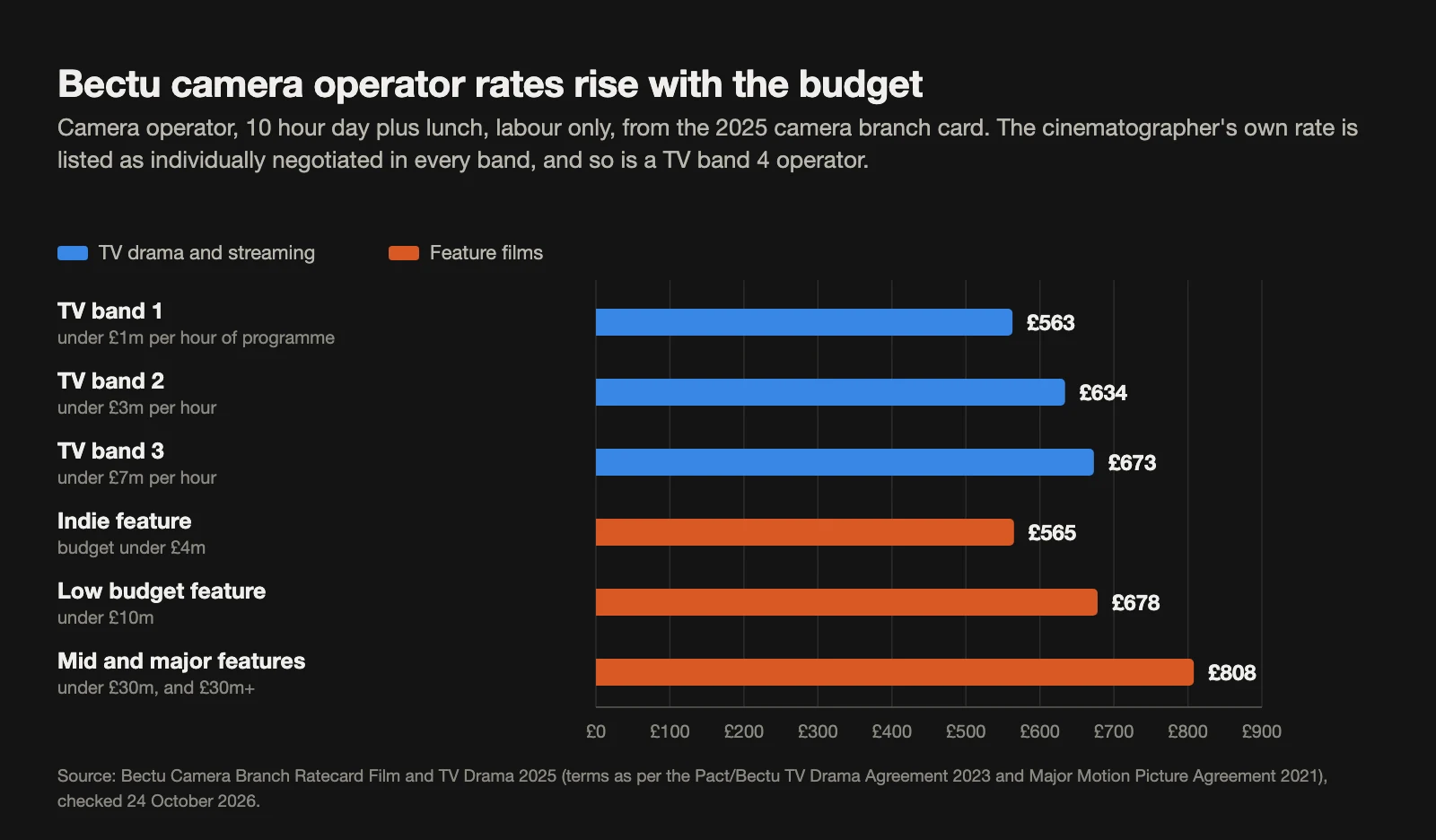
Two notes on the same card matter to any DoP. First, the branch says the prep and wrap time included in a camera department day is zero, so any time before call or after wrap is overtime. Second, every rate on it is labour only, and crew are advised to keep labour and equipment on separate lines. If a production asks for a deal, the branch's advice is to hold the labour rate and discount the kit.
For tax, HMRC's employment status manual lists the director of photography among the behind the camera roles normally treated as self-employed, when its conditions are met.
Corporate and branded content: no card, so start from your floor
None of the union or trade body cards we found publishes a DoP rate for corporate films, internal comms or most branded content. The nearest published figures are for adjacent roles: YunoJuno's average day for a videographer is £427, Bectu's London live events guidance puts a corporate camera operator at £360 to £380, and its sound card puts a factual and corporate sound recordist at £500. Our videographer day rate guide goes through those in detail.
In practice the line between "videographer" and "DoP" on a corporate job is about responsibility: a DoP designs the light, runs a camera and lighting team and answers for the look. If that's the job, price it from your own floor and the kit, not from a one-person shooter's rate.

Prep, recce and travel days
This is where DoP quotes leak money. Under the APA terms, most crew are paid non-shooting days by the hour: a recce day is 8 hours at the basic hourly rate, and since September 2026 a prep day can be booked as 8 or 10 hours. The DoP, the art director and the location manager are different. For them, every day of the engagement counts as a full basic working day of 10 hours plus lunch.

Travel is paid at the basic hourly rate under the APA terms. On a working day you're paid for travel time minus the first hour each way, and a travel day with no work has a five hour minimum. If a flight is over four hours, there's no shooting that day except in exceptional circumstances; over eight hours, no shooting for 24 hours after landing. Mileage outside the M25 is 50p a mile from a Soho postcode.
Cancellation has a scale: nothing with seven or more days' notice, then 50%, 75% and finally the whole fee on the day before. Recce, build and pre-light days count as engagements too.
Here's how those rules add up on a small job:
| Line (APA terms, our illustration) | Days or hours | Amount |
|---|---|---|
| Recce day | 1 full day at £1,200 | £1,200 |
| Prep day | 1 full day at £1,200 | £1,200 |
| Shoot days | 2 at £1,200 | £2,400 |
| Overtime on day two | 3 hours at £120 | £360 |
| DoP labour | £5,160 | |
| Camera kit, hired separately | 2 days at £850, ex VAT, no lenses | £1,700 |
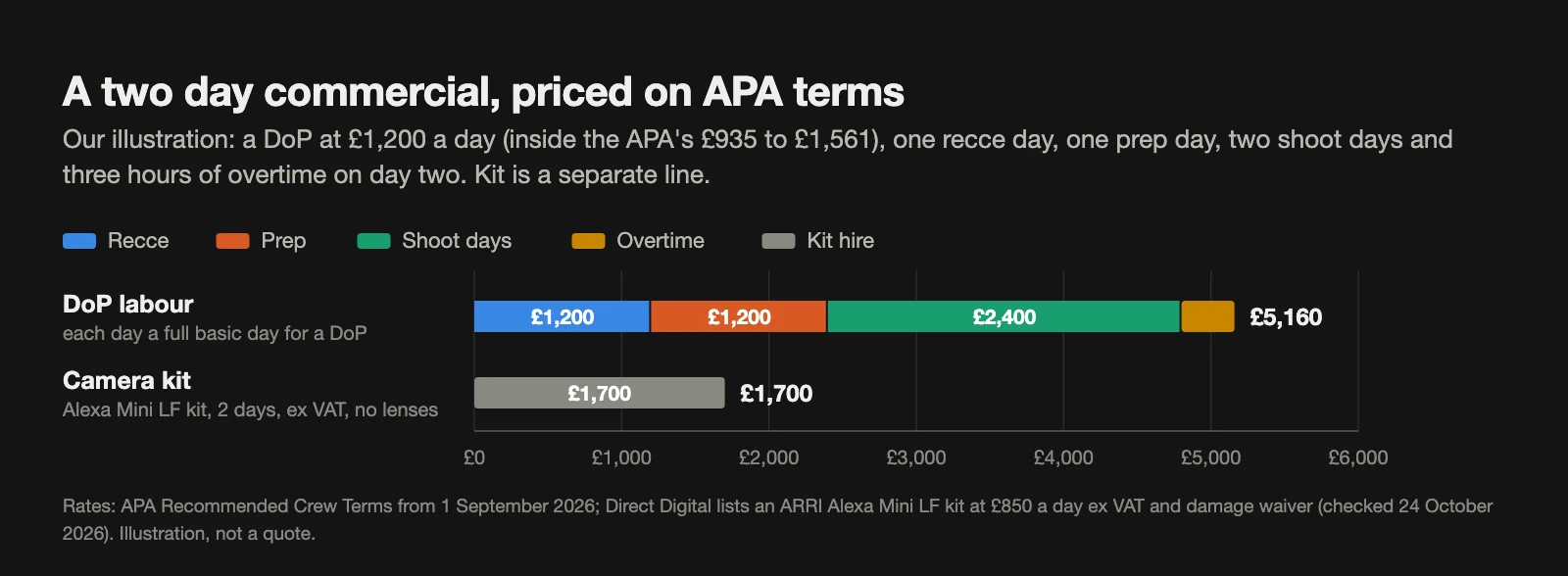
Leave the recce and prep off and the same job is £2,760. That's the difference between a day rate and a booking.
Kit: hire it in, or hire yours out
The camera package is usually hired from a rental house on the production's account. As of October 2026, Direct Digital lists an ARRI Alexa Mini LF kit (body, viewfinder, power, four 1TB Codex drives, no lenses) at £850 a day plus VAT and damage waiver. At the other end, Wex Rental lists a Sony FX6 body at £145 a day plus VAT.
If you own kit, invoice it as hire at a rate a production would recognise, on its own line, and insure it properly. The camera branch also mentions "box money", a fee for your own tool kit. Whatever you call it, keep it out of the labour rate, so a discount on kit never becomes a cut to your day.
Overtime and the length of the day
On commercials, the APA's best practice caps scheduled days at 12 hours from call. In drama, the camera branch recommends not accepting any deal that builds unpaid time outside the shooting day into the rate (it wants "0/0" prep and wrap), and putting the agreed hours in a deal memo before the job. On corporate work, nobody sets the rule for you, so write it into the quote: the hours in a day, the overtime rate after them, and what a weekend costs.
Work out the floor under your rate
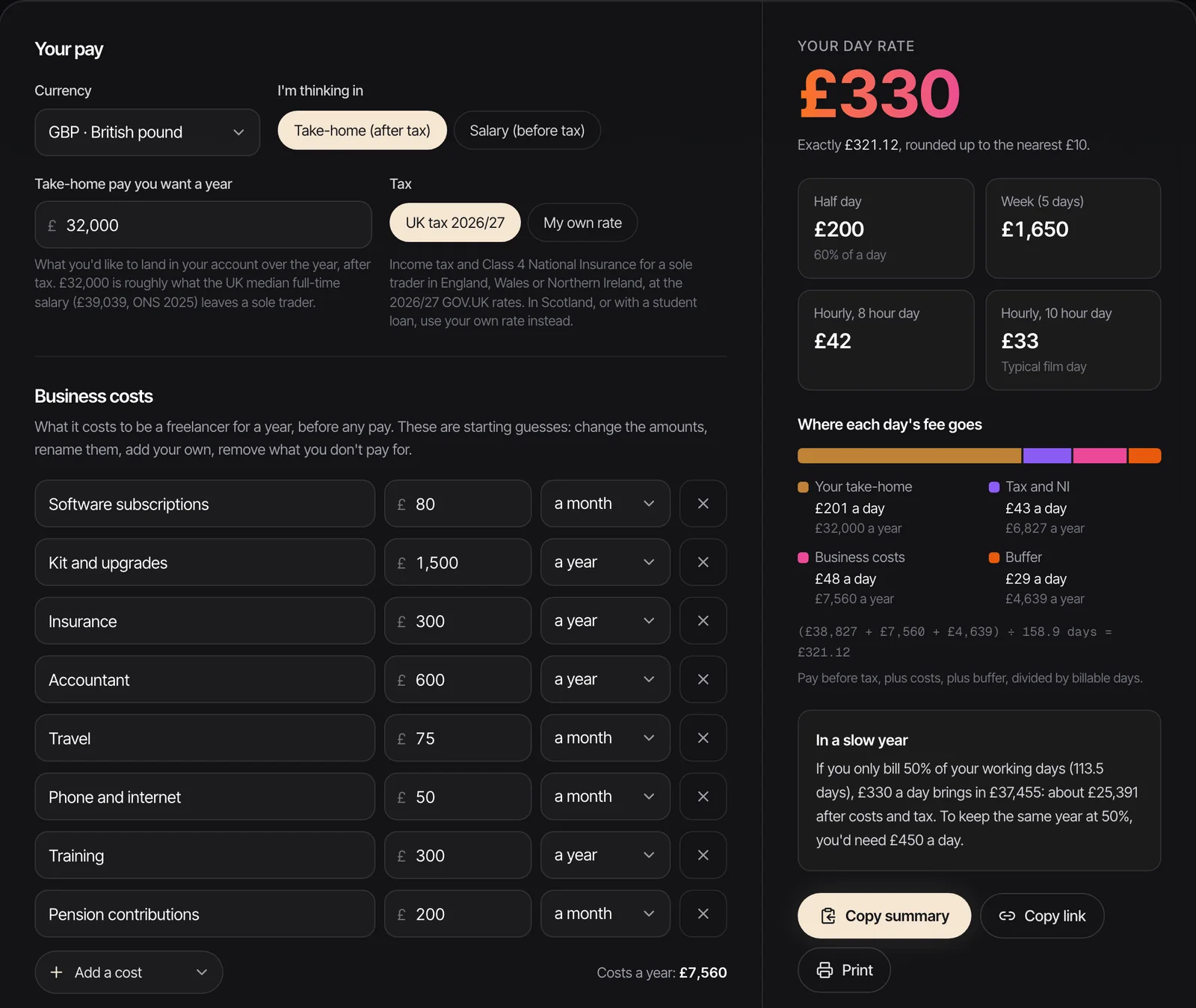
The APA range tells you what commercials pay. It doesn't tell you what you need, and a DoP's year can hold a lot of unbilled days: pitching, testing, waiting for a job to confirm. Here's an illustration from the engine behind our UK freelance day rate calculator: £40,000 take-home under 2026/27 UK tax, £10,360 of yearly costs including £4,000 of owned kit and £600 of insurance, and a 10% buffer.
| Billable days | Share of 227 working days | Day rate needed (rounded up) |
|---|---|---|
| 158.9 | 70% | £420 |
| 113.5 | 50% | £590 |
| 79.5 | 35% | £840 |
The same year that needs £420 a day at 159 days needs £840 at 80. A DoP who shoots 80 days a year at the bottom of the APA range clears that floor; one who shoots 80 days at a corporate camera operator's rate doesn't come close. The method is in our guide to calculating a freelance day rate.
References are part of a DoP's job
The best DoP pitches we see come with a point of view about light: frames that show the key, the contrast and the colour, not just the mood. Our guides to building a lighting reference library and finding and saving colour grading references cover the habit, and turning references into a shot list is how they reach the floor.
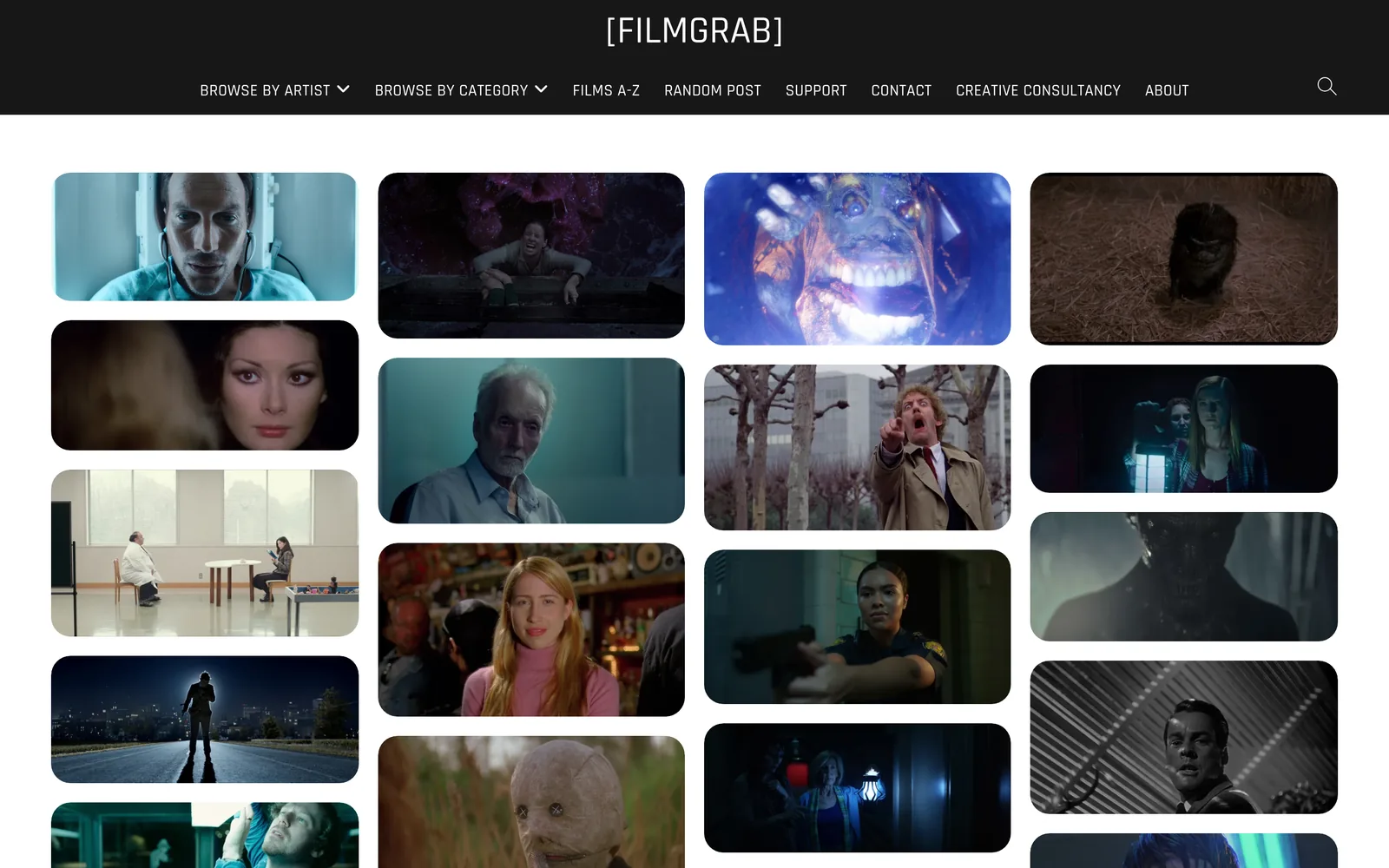
For stills, FILMGRAB is free and organised by film, and we compare it with ShotDeck and FRAMESET in ShotDeck vs FILMGRAB vs FRAMESET.
Spark is for the part of the job that doesn't appear on the invoice: knowing what you want before the recce.
FAQs
What is a DoP's day rate in the UK?
On commercials, the APA's recommended terms from 1 September 2026 give a DoP a basic daily rate of £935 to £1,561 for 10 hours plus lunch, labour only. In film and TV drama, Bectu's camera branch card lists the cinematographer's rate as individually negotiated in every budget band. Corporate work has no published rate, so it depends on the job and the DoP.
Are DoPs paid for prep and recce days?
Yes. Under the APA's commercials terms, every day of a DoP's engagement, including recce and prep, counts as a full basic working day. Most other crew are paid prep and recce days by the hour, for 8 hours (or 8 or 10 for prep). On corporate jobs, agree it in the quote.
Does a DoP's day rate include camera kit?
Usually not. Bectu's camera branch card says all its rates are labour only and advises keeping equipment hire on a separate line. As a guide, a UK rental house lists an ARRI Alexa Mini LF kit at £850 a day plus VAT, without lenses.
How is DoP overtime calculated?
On APA terms, overtime starts after 11 hours from call (10 hours plus lunch). For day rates of £697 or more, including every DoP rate in the range, each overtime hour is paid at the basic hourly rate, a tenth of the day rate, rising to three times that after midnight.
What is the difference between a DoP and a camera operator's rate?
On 2026 APA terms a camera operator's range is £529 to £656 a day, against £935 to £1,561 for the DoP. In drama, Bectu's 2025 card sets the operator at £563 to £808 for a 10 hour day depending on budget, while the cinematographer negotiates individually.
Are DoPs self-employed in the UK?
HMRC's employment status manual lists the director of photography among behind the camera roles normally treated as self-employed, when its conditions are met, such as working on a specific production for a finite period. Check your own contracts with an accountant.
Keep reading
All articles
How to Make a Ripomatic (or Mood Film) for a Pitch
A good ripomatic lets a room feel the film before it exists. A careless one turns up online with other people's footage and your client's logo on it.

How to Make a Showreel: Editors, Motion Designers and Directors
Assume whoever's hiring stops watching after the first few seconds unless you give them a reason not to. Here's how to cut for that, from the opening shot to the loops on your portfolio page.

How to Make Style Frames for a Motion Design Pitch
A style frame is a promise that the film will look exactly like this when it moves. Here's how to make a set a client can say yes to, from the first reference to the animatic.