
Spark vs Are.na: Saving and Finding Creative Inspiration
Are.na is one of the nicest places on the internet, and we'd defend it in a pub. It's also not built for the reel your DoP sent at midnight. Here's how to tell which one you need.
By the Spark team ·
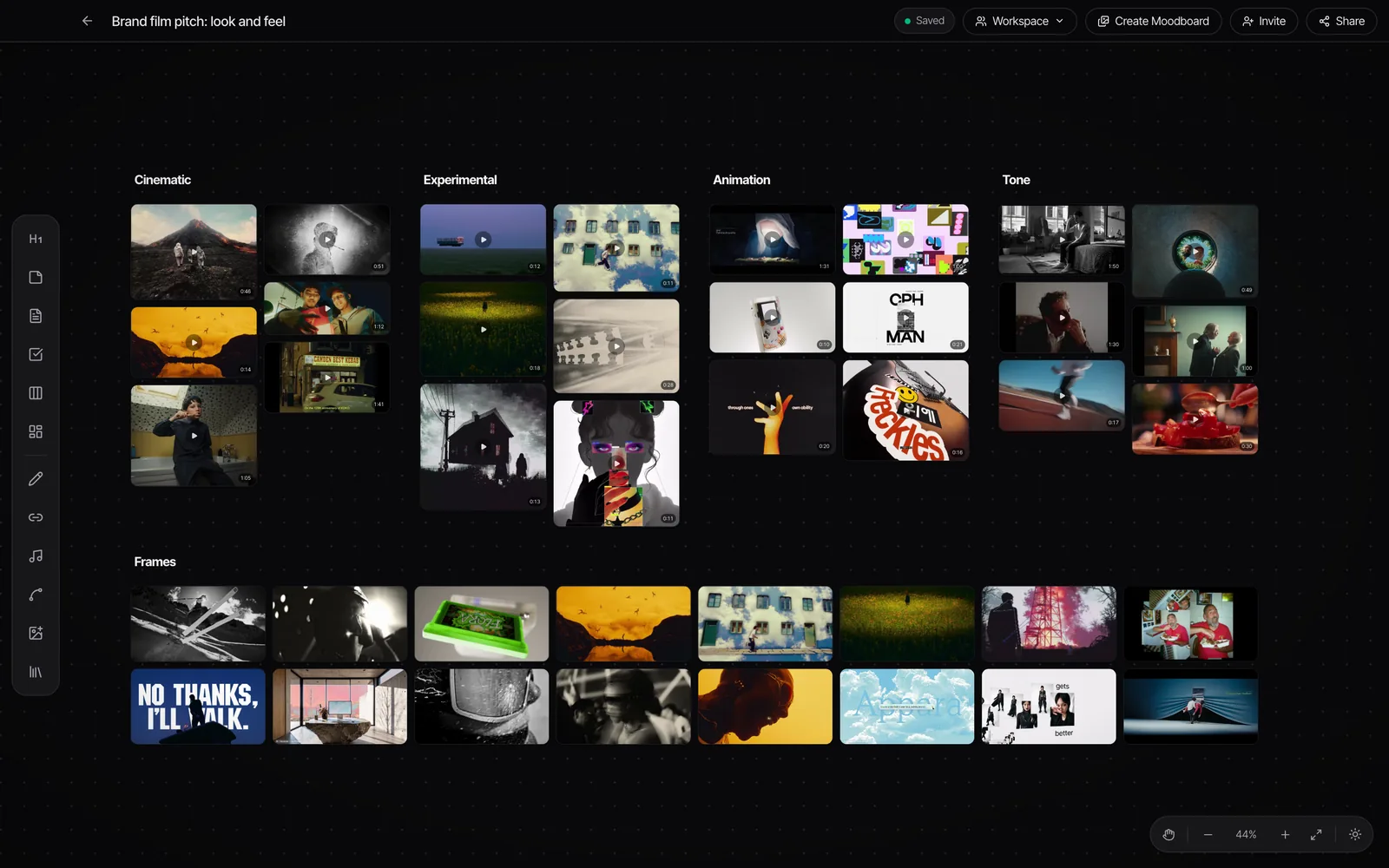
Are.na is where you think. Spark is where the footage lives. So Spark vs Are.na is a slightly odd matchup, and we say that as the people who make Spark. If you collect slowly, love following one idea into the next and want an ad-free home for images, essays, links and PDFs, Are.na is wonderful and cheap. If most of what you save is video (reels, TikToks, ads, YouTube and Vimeo) and you need it back by Thursday as a GIF on slide 6, that's the job we built Spark for.
We're Perspective Pictures, a production company, and Spark started as our own fix for references scattered across DMs and camera rolls. So yes, we're biased. We also think Are.na does several things better than we ever will, and we'll say exactly which.
 Are.na
 Spark
Are.na or Spark, in one table
| Are.na | Spark | |
|---|---|---|
| What it is | A member-funded platform for collecting and connecting ideas | A desktop app for saving, searching and reusing video and image references |
| Where it runs | Browser, iOS and Android, extensions for Chrome, Safari and Firefox | Mac and Windows app, plus saving from your phone by Instagram DM or WhatsApp |
| Best at | Slow research, ideas that connect across projects, other people's thinking | Keeping video from social platforms and finding it again by what's in it |
| Video | Links and embeds, plus files you upload | A saved copy that plays in place, source URL kept |
| Search | Titles, descriptions and your own text; paid plans add full text of saved links | AI descriptions of each video, transcripts of what's said, colour words |
| Discovery | Public channels and people to follow, no algorithm | None. It only knows what you save |
| Getting things out | Presentation mode on paid plans | Export GIF, Export Frame, Create Moodboard to Slides, Canva, PowerPoint, Keynote or PDF |
| Price (as of October 2026) | Free for up to 200 blocks; Premium from $7 per month ($70 a year); Supporter $120 a year | Free for 15 videos and 30 frames; Creator from £16 per month; Studio £23 per user per month |
Are.na prices in dollars, Spark in pounds ($24 and $34 in the US). Both checked on the vendors' own pages in October 2026.
Are.na, in a paragraph we'd happily sign
Are.na is built from blocks: an image, a link, a bit of text, a PDF, an embed. Blocks go into channels, and one block can live in as many channels as you like, yours or anybody's. A still you saved for a perfume pitch can also sit in your channel on light through net curtains and in a stranger's channel on Polish film posters. Give it three years and it becomes a map of how you think.
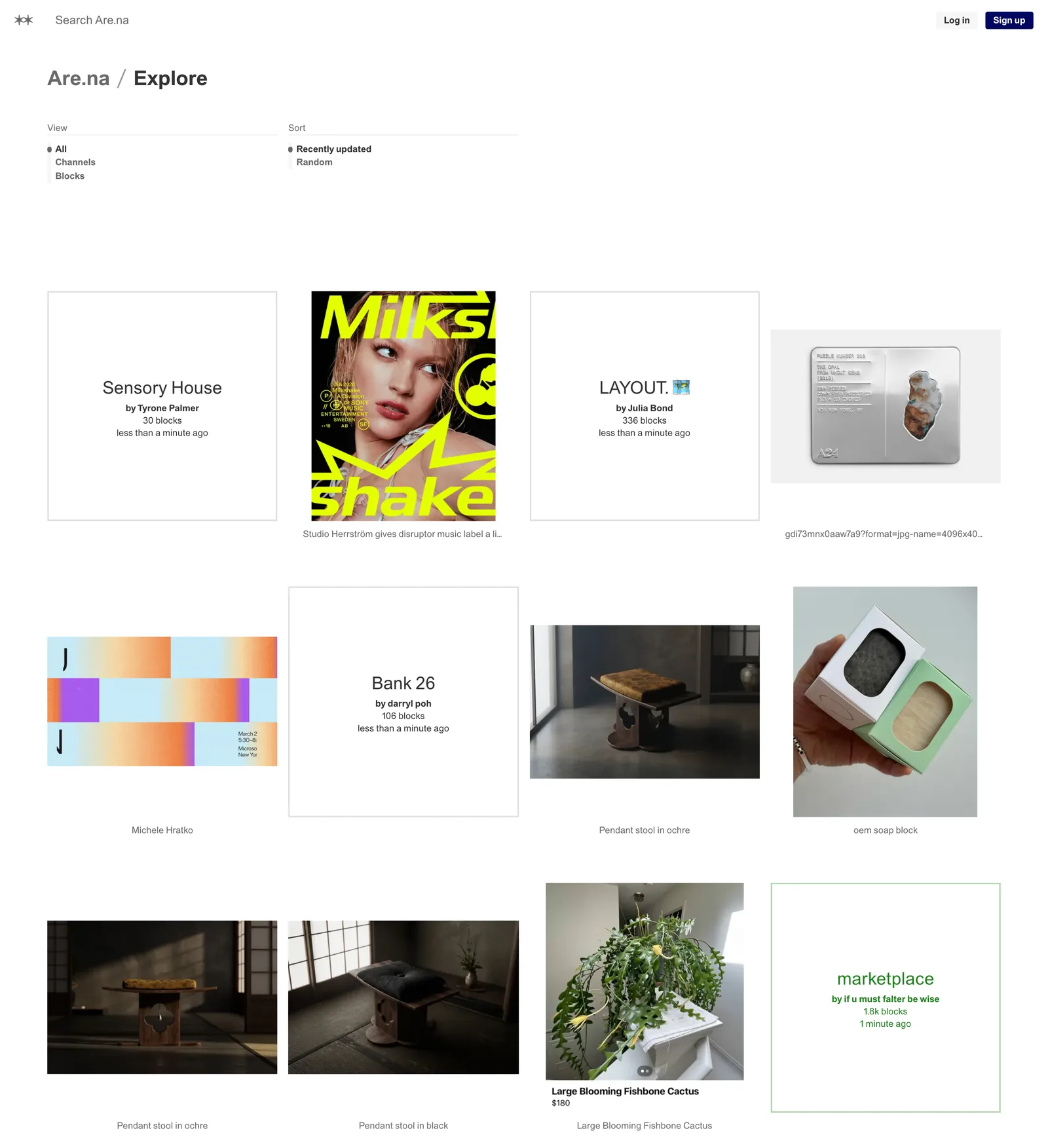
The ethos is the other half of the appeal. Are.na is paid for by its members, not advertisers, and its about page publishes its monthly revenue and how many people pay. There are no likes and no algorithmic feed. If you've ever opened it to file one picture and surfaced two hours later in somebody's channel of 1970s Czech book covers, you know the feeling. Spark has nothing like that. We're not going to pretend otherwise.
The 2am reel problem
Spark comes from a narrower, grubbier problem. On a pitch week our references arrive from everywhere at once: an Instagram DM from the DoP, a TikTok in someone's favourites, a WhatsApp at 2am that just says "THIS", a Vimeo link from the agency, a Meta ad a producer screenshotted on the bus. Nearly all of it moves. And when the treatment's due, nobody can find the one with the carriage floating over the field.
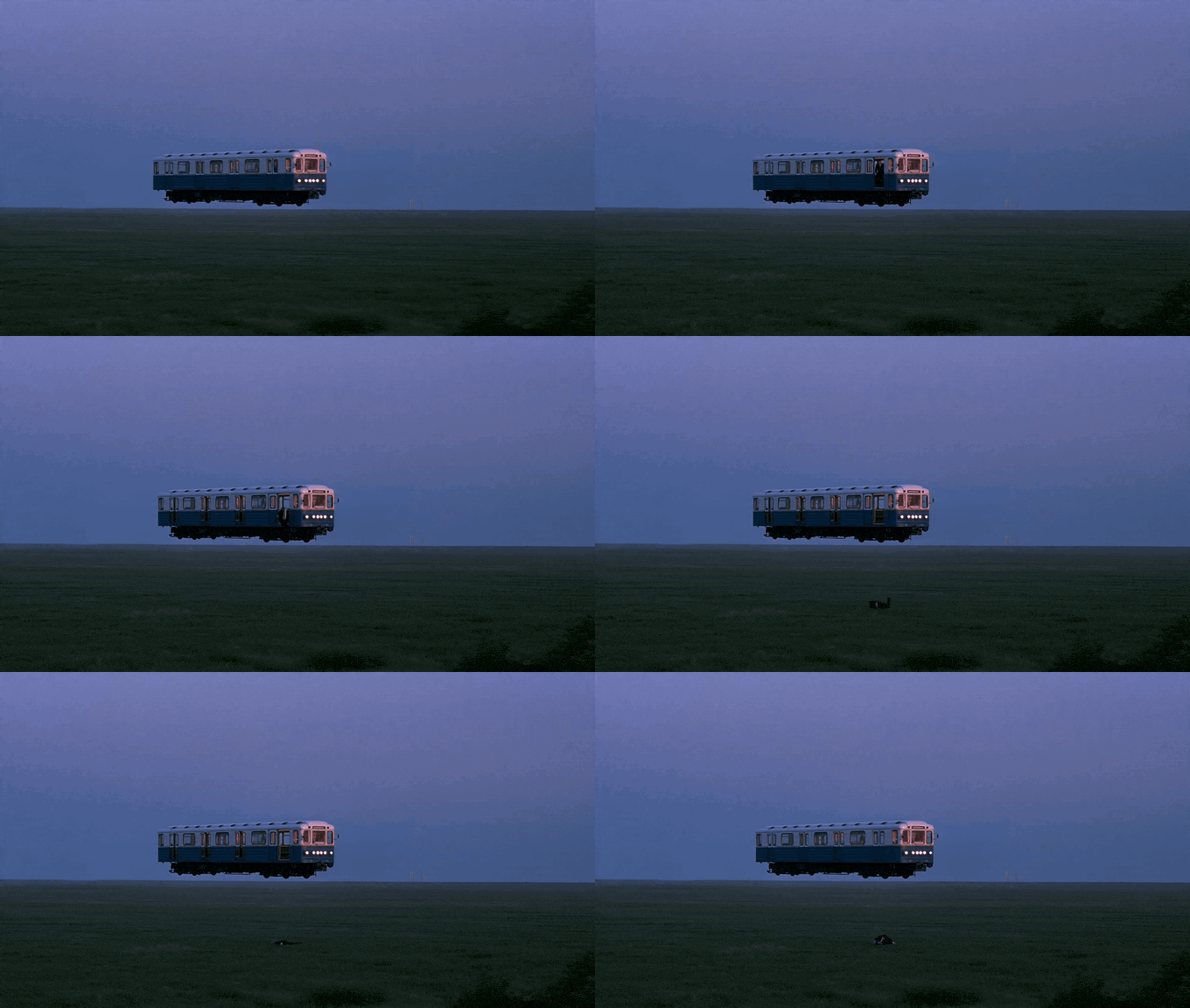
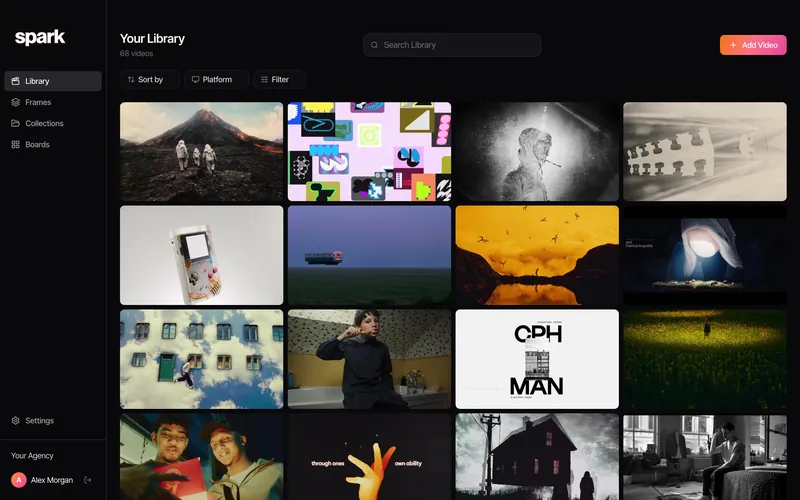
So Spark is a library first. Forward a reel to @sparkreferences on Instagram (free plan included, up to its limits), paste a link from Instagram, TikTok, YouTube, Vimeo, Pinterest, Facebook, LinkedIn or X, save ads from the Meta Ad Library and TikTok Creative Center, use the Chrome extension, or send a link on WhatsApp. Spark keeps the video and makes a thumbnail. On Creator and Studio it also writes a description of the footage and transcribes the audio. Anything that won't save, a client portal for instance, goes in through the built-in screen recorder.
Saving video: this is the one that decides it
Are.na was built around images, text and links, and it is lovely at those. A YouTube or Vimeo link comes in as an embed that plays from the original. An Instagram reel or a TikTok usually arrives as a link with a preview. You can upload a video file you already have, but Are.na won't go and fetch it from a post for you.
That matters for a dull, important reason. Links rot. Accounts go private, brands pull campaigns, creators delete the thing they're now embarrassed by. A reference that's a pointer to someone else's post can vanish the week before the shoot, which is exactly when you need it.
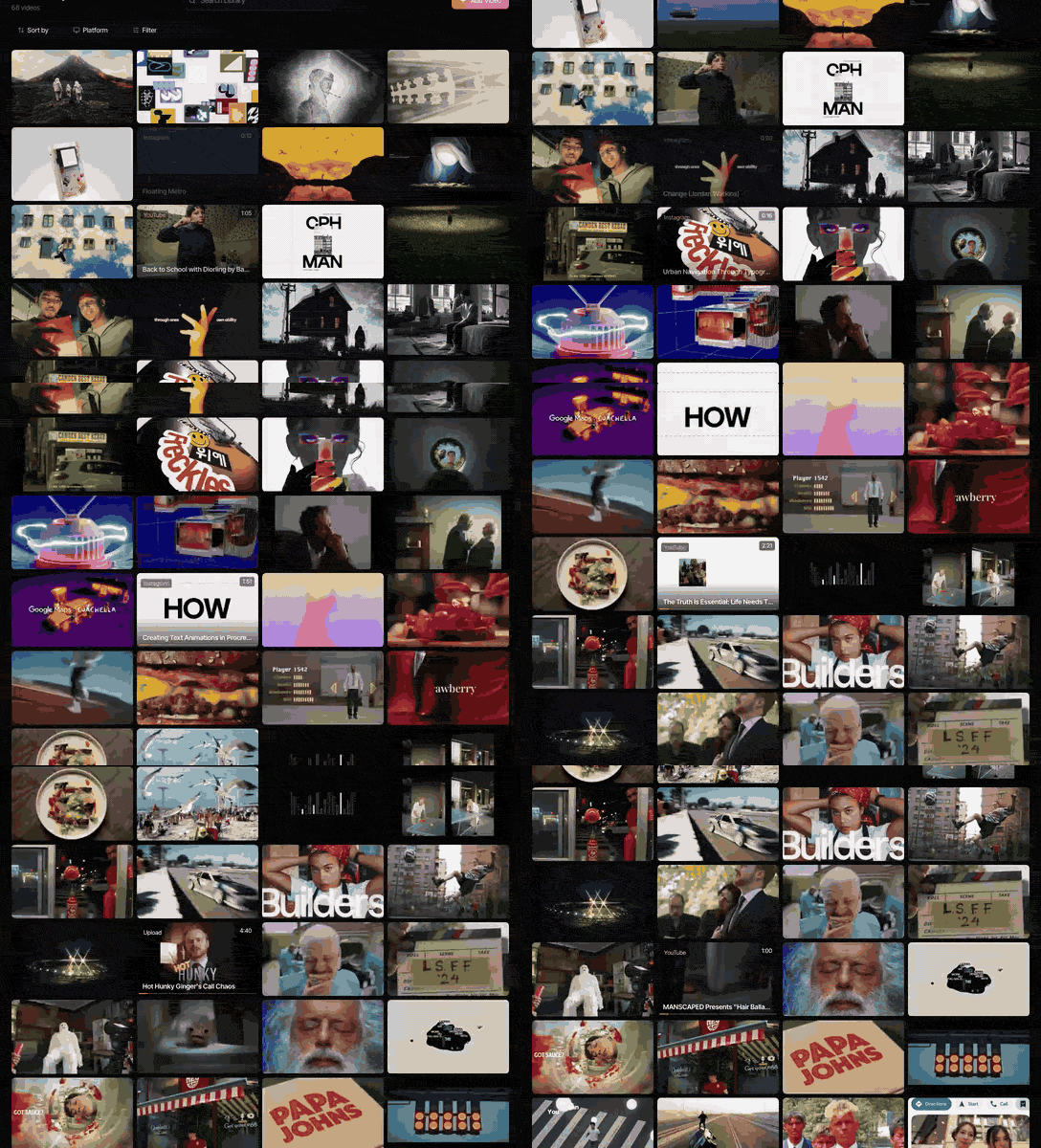
Spark keeps its own copy, so the reference outlives the post. If your research is mostly stills, essays and the odd YouTube link, none of this touches you. If it's mostly reels, it's the whole story.
Finding it again
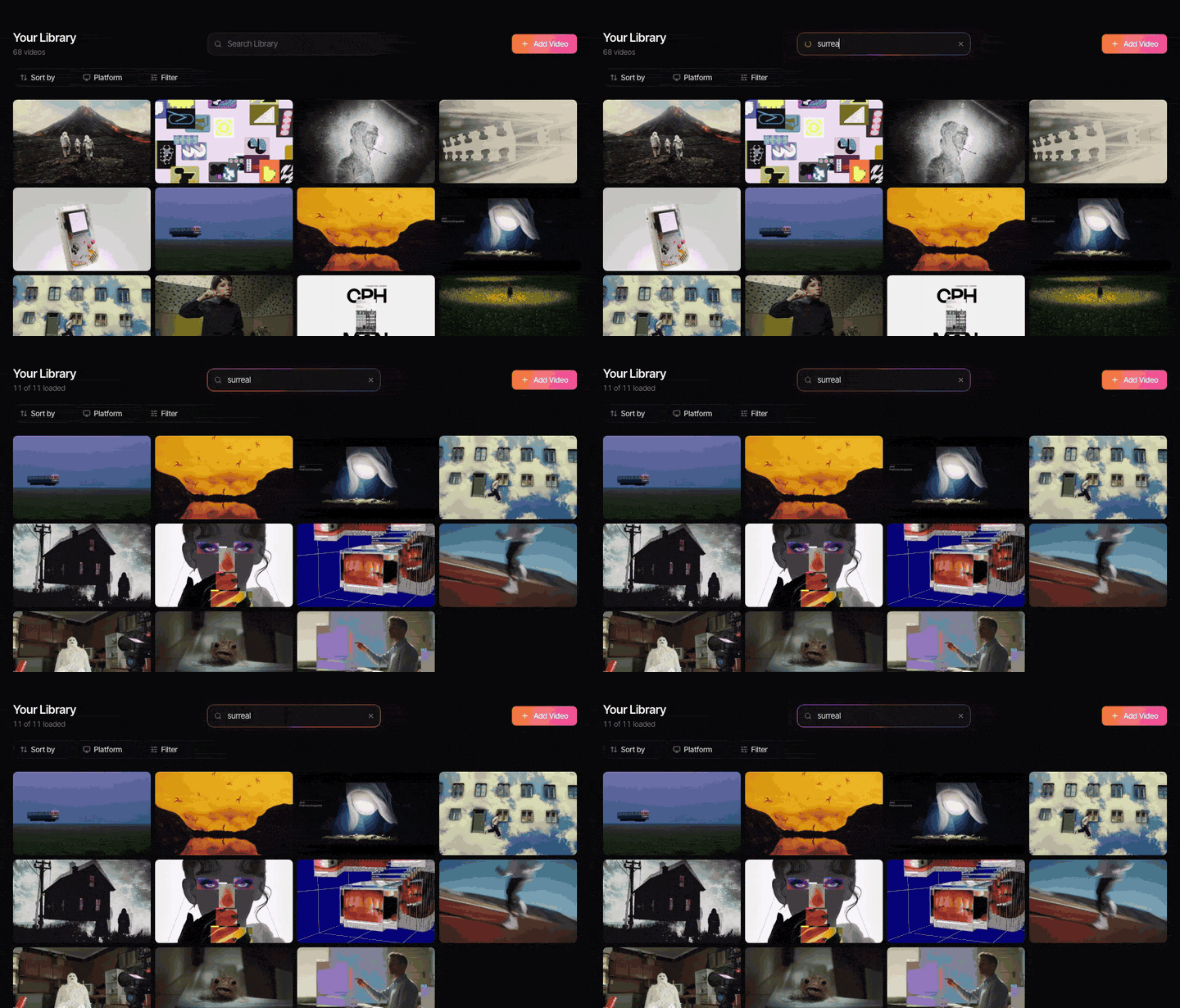
Are.na's search covers titles, descriptions and the text you've written, and the paid plans add full text for the links and articles you save. Useful. What it can't do is look inside a video and tell you there's a man running across a building made of sky.
Spark's search does, because on Creator and Studio every video gets an AI description and a transcript. Type what you remember seeing, or a half-remembered line of voiceover, and the clip comes back, tags or no tags. Colour words work too, because every frame you keep gets a five-colour palette.
Be fair to Are.na here, though. It's doing a different kind of finding. Following connections out from one block, or browsing a channel someone has tended for years, turns up things you didn't know to search for. Search is for when you know what you want. Are.na is often better when you don't. Our guide to searching videos by dialogue and transcript covers the Spark half of that in more detail.
Discovery and community: Are.na, by a distance
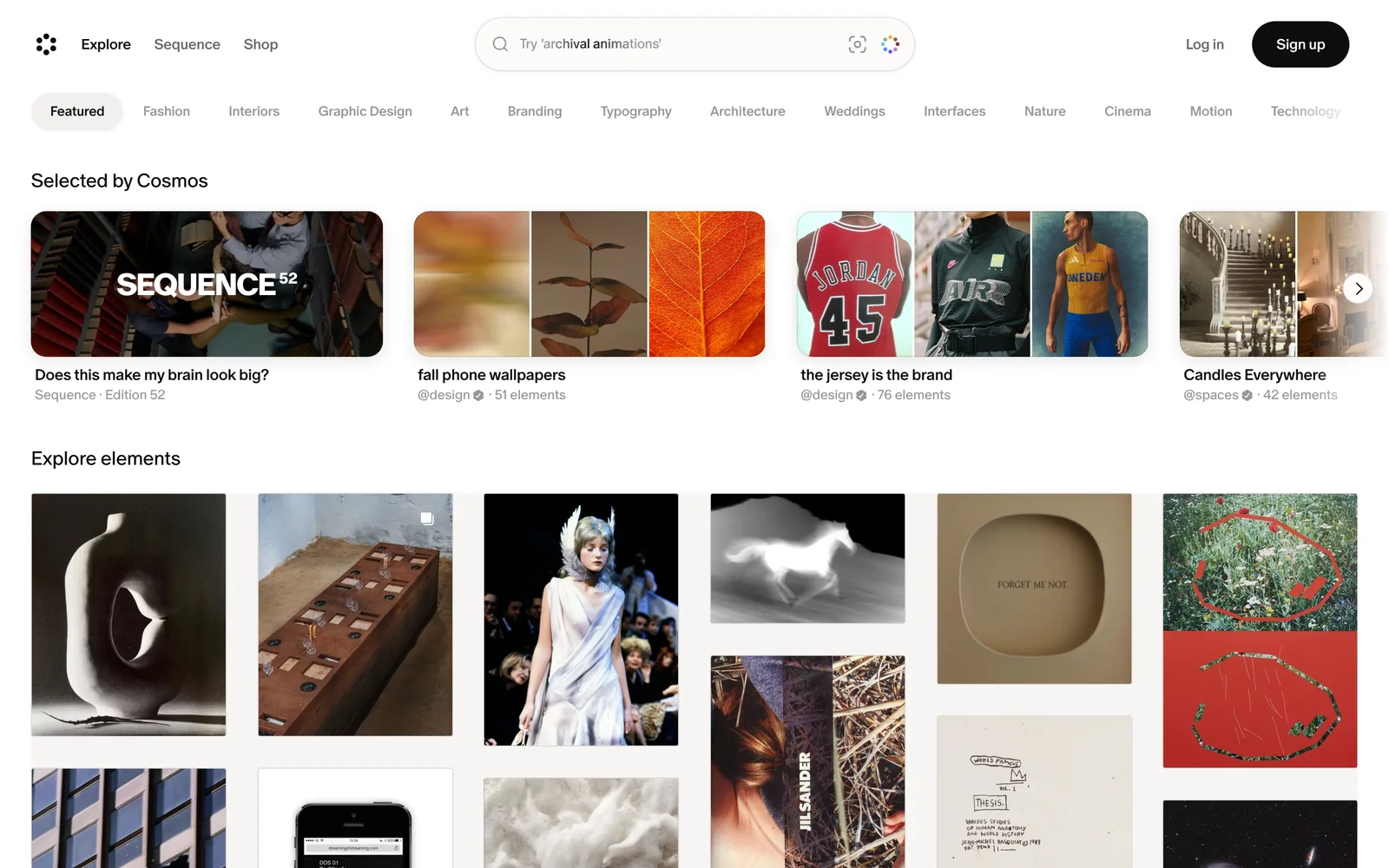
Spark has no feed, no public profiles and no way to wander into a stranger's taste. Are.na is part library, part slow social network of designers, artists, writers and researchers, and its public channels are some of the best-tended collections on the web. If discovery is half the reason you collect, Are.na earns its place whatever else you use.
If that's the half you care about most, our roundup of Pinterest alternatives for creatives puts Are.na beside Cosmos and Savee, the other two we'd point you to.
Working with a team, and with a client
Are.na lets you add collaborators to a channel, make channels private and set up groups, which suits a studio's shared research or a class. It's the same account as your personal research, which is either charming or slightly leaky, depending on how tidy you are.
Spark's Studio plan gives a team its own shared workspace, and a Slack integration that saves video links posted in a channel straight into it. Collections group a pitch's videos and frames, and you can invite a client to one so they see the edited version of your thinking.
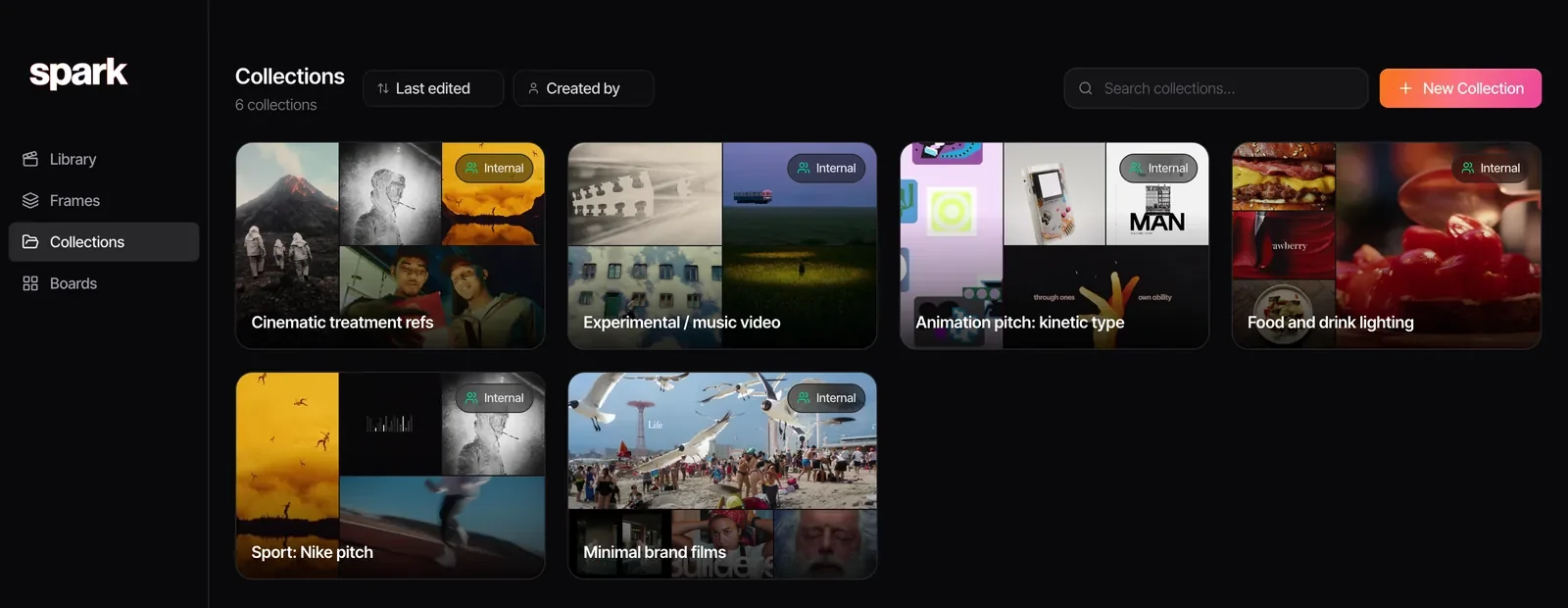
Teammates on the same board in the desktop app see each other's changes within seconds, and a board's Share button gives a client a view-only link. What Spark doesn't have is a browser version a client can wander into to rearrange things. It's a desktop app, on purpose.
Getting it into a deck
Are.na's paid plans include a presentation mode for showing a channel, which works well for a crit or a studio session. For a client deck you'll usually be dragging images out by hand.
Spark leans hard into the deck end, because that's where references go to work. Export GIF trims the exact moment and sets frame rate and width. Export Frame grabs a clean still. Create Moodboard lays out a board or collection and sends it to Google Slides, Canva, PowerPoint, Keynote or PDF. The GIFs keep moving in the slide versions; only the PDF freezes them on the first frame.
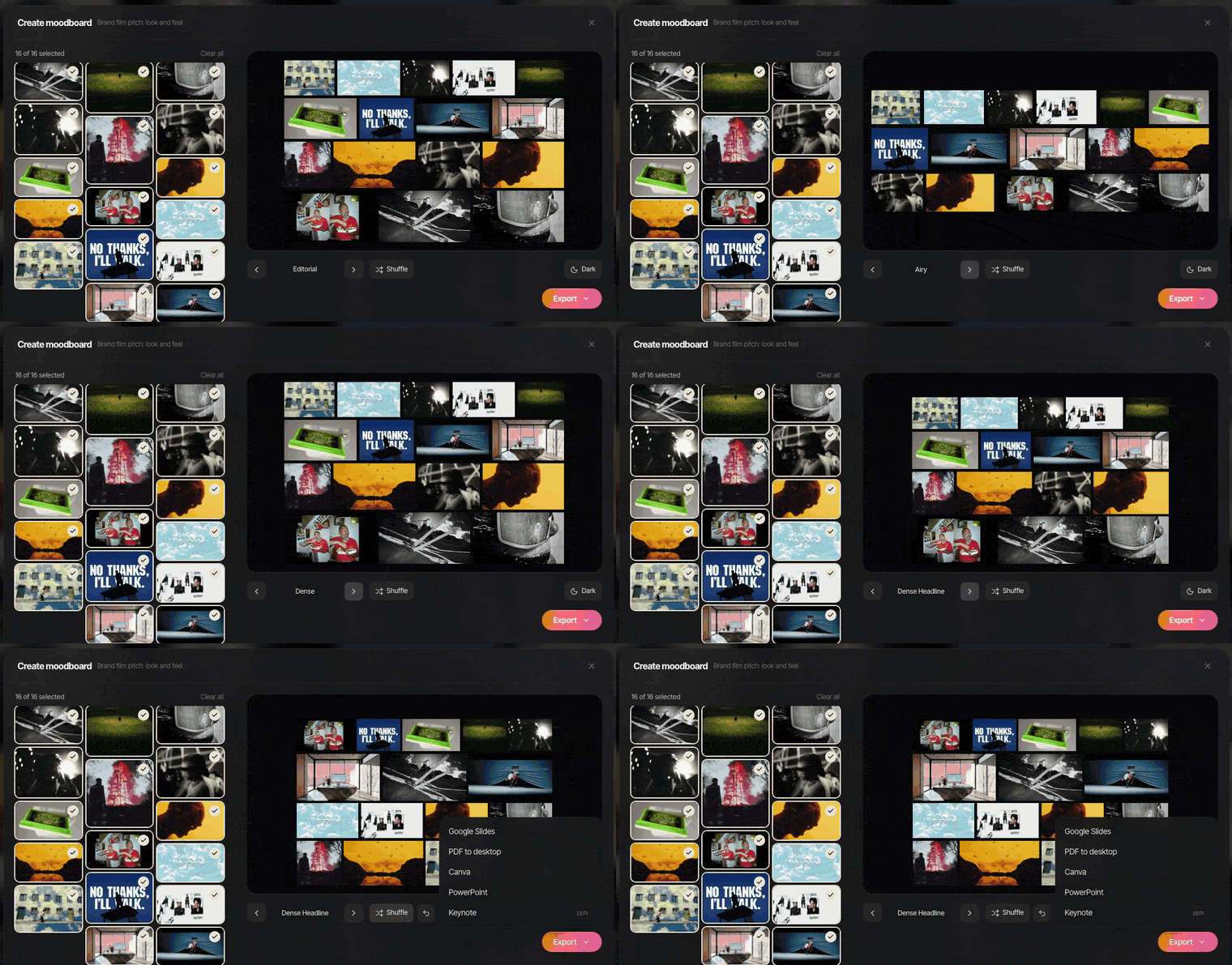
No Spark account? There's a lighter version that runs in the browser, free: drop in images and GIFs from anywhere, Are.na included, pick a layout and export a deck.
Price, and what you're paying for
Are.na's free Guest plan holds up to 200 blocks, enough to see whether you like the way it thinks. Premium is $7 a month or $70 a year and lifts that limit. Supporter is $120 a year, for people who want to put a bit more in. Students get half price on Premium for two years. It is one of the best-value subscriptions a creative person can have, and we mean that.
Spark's free plan holds 15 videos, 30 frames and 1 GB, no card and no time limit. Creator is £16 a month for one person, with AI descriptions, transcription and GIF export. Studio is £23 per user a month for team workspaces and Slack. Spark costs more because it stores, describes and transcribes video, and video is the expensive bit.
So, Are.na or Spark?
Short answers, because you've read enough tables.
- Are.na if your research is mostly images, writing, links and PDFs, you think across projects over years, and you want discovery without ads or an algorithm.
- Spark if most of your references are video from social feeds and ad libraries, you've lost one because the post vanished, and you turn references into GIFs, frames and moodboards every week.
- Both if Are.na is where you think and Spark is where the footage lives. That's a perfectly sane setup, and the one we'd suggest to most studios.
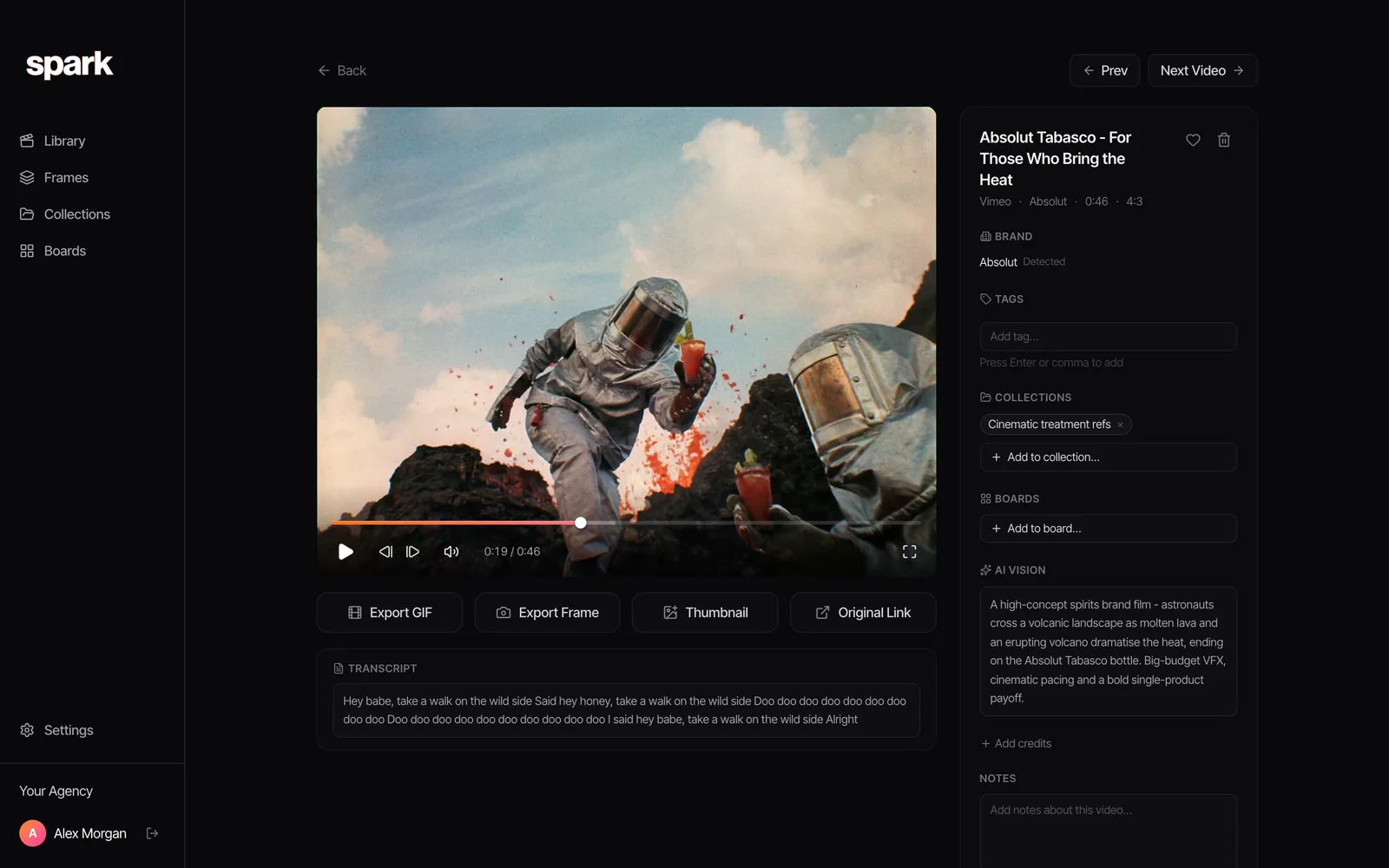
Spark won't make you a more interesting thinker. Are.na might. What Spark will do is make sure the reel you saved in March is still there, and findable, when the treatment's due. It's a smaller ambition than Are.na's. In pitch week it's the more pressing one.
For the wider field, see our roundup of creative reference management tools, and for a method that works in either app, how to build a searchable creative library. If moodboards are the real question, Spark vs Milanote is the closer fight.
FAQs
Is Are.na free?
Yes, up to 200 blocks on the free Guest plan. Premium removes the limit and costs $7 a month or $70 a year as of October 2026, and there's a $120 a year Supporter tier. Students get half price on Premium for two years.
Can you save videos on Are.na?
You can save video links, which arrive as embeds or link previews, and you can upload video files you already have. Are.na doesn't download a video from an Instagram or TikTok post for you, so if the original goes private or is deleted, a link block may stop showing it.
Does Are.na have ads or an algorithm?
No. Are.na is funded by its paying members, with no advertising, no algorithmic feed and no likes. What you see comes from the channels and people you choose to follow.
Is there an Are.na desktop app?
Are.na runs in the browser, with iOS and Android apps and browser extensions for Chrome, Safari and Firefox. As of October 2026 it doesn't list a dedicated desktop app.
Is Spark a good Are.na alternative?
For video references, yes: Spark saves the video itself, describes it and transcribes it so you can search inside it. For slow research, discovery and connecting ideas across years, no, Are.na is better at that. Plenty of people use Are.na for thinking and Spark for footage.
Can I use Are.na for a team moodboard?
You can add collaborators to a channel or set up a group, and the paid plans' presentation mode works for showing it. For a client deck you'll still need Keynote, Google Slides or similar, and for video-heavy boards a tool that saves and plays the clips themselves will cause fewer headaches.
Keep reading
All articles
Best Pinterest Alternatives for Creative Professionals
Pinterest does two jobs: finding ideas and keeping them. Most alternatives only do one. Which to use for each, from a production company that has tried them all.
Spark vs Eagle: Which Reference Library Fits Your Workflow?
Eagle is one of the best local asset libraries ever made, and it costs less than a round of drinks. Spark does a different job. Here's how to tell which one you need.
Spark vs Pinterest: Which Is Better for Organising Video References?
Pinterest is where you find things. Spark is where you keep them. A fair comparison from a team that uses both, with a clear answer for who needs which.