
Video Production Proposal Template (and What Clients Actually Read)
Clients read three things in a proposal: whether you understood them, what they'll get, and what it costs. Here's a template built around those, with every budget line explained.
By the Spark team ·

A video production proposal has nine parts: your understanding of the brief, your approach, the deliverables, the timeline, the budget, music, usage, revisions and terms. The first three tell the client you heard them and what they'll get. The budget tells them what it costs and why. The last four stop the job going wrong later. Copy the template below, fill it in section by section, and put a one page summary at the front, because that page may be the only one the person who signs it reads.
Spark's founder wrote these as a producer over more than ten years running a London production company, and we make Spark, a reference library for creative teams. This is the structure that works for a brand film or a set of social ads. It's practical guidance, not legal advice: have your terms checked by a solicitor or your trade body before you rely on them.
What clients actually read
Assume the person who signs off reads three things: the summary, the deliverables and the total. Everyone else reads the pages that affect them. The marketing manager checks the deliverables against their media plan. Procurement reads the terms. The creative lead reads the approach.
So the proposal is built for skimming. A one page summary up front with the idea in a sentence, what they'll get, the dates and the total. Then the detail, one section per page, in the order below. If the client sent a brief, mirror its headings so they can tick things off; our video creative brief template shows what a good one asks for.
The video production proposal template
VIDEO PRODUCTION PROPOSAL

0. Summary (one page)
   The idea in a sentence, deliverables, key dates, total cost.

1. Our understanding
   The brief played back: objective, audience, the one thing to say.

2. Approach
   How we'll make it, with references. Link the treatment if there is one.

3. Deliverables
   Every version: length, aspect ratio, format, platform, subtitles.

4. Timeline
   From confirmation to delivery, with feedback dates.

5. Budget
   By line: pre-production, crew, kit, locations, talent,
   art department, travel, post, music, insurance, fee, contingency.

6. Music
   Library, commissioned or commercial track, and what the licence covers.

7. Usage
   Media, territories and period the fee and licences cover.

8. Revisions
   How many rounds, at which stage, and what counts as a round.

9. Terms
   Payment, cancellation, weather, overtime, ownership, validity.
The summary page, filled in
Invented for illustration, answering the iced coffee brief from our brief template post. This is the page that has to work on its own:
- The idea: cold coffee for the ride, not the desk. Three short vertical films of commuters cracking a can at the lights.
- You'll get: three 15 second 9:16 ads with burned in subtitles, one 6 second bumper, and twelve stills.
- Key dates: shoot in week three, first cut in week four, delivery at the end of week six.
- Total: one figure, all in except media, for paid social in the UK for 12 months. Valid for 30 days.
- What we need from you: product a week before the shoot, and one person to send consolidated notes.
Everything after this page explains and protects those five lines.
1. Our understanding
Play the brief back in your own words in half a page: what the film has to do, for whom, and the one thing it says. Add one line on what you think matters most. This page is where a client decides whether you listened, and it catches misunderstandings while they're cheap to fix.
If the brief was thin, list your assumptions here ("We've assumed one shoot day in London and no actors with lines"). Every assumption you write down is a change you can price later without an argument.
2. Approach
How you'll make it, in a page or two: the idea, the look, how you'll shoot it, and why that suits the objective. For a directed job this is where the director's treatment goes, or a link to it. For a smaller job, a few reference frames with a line under each do the same work.
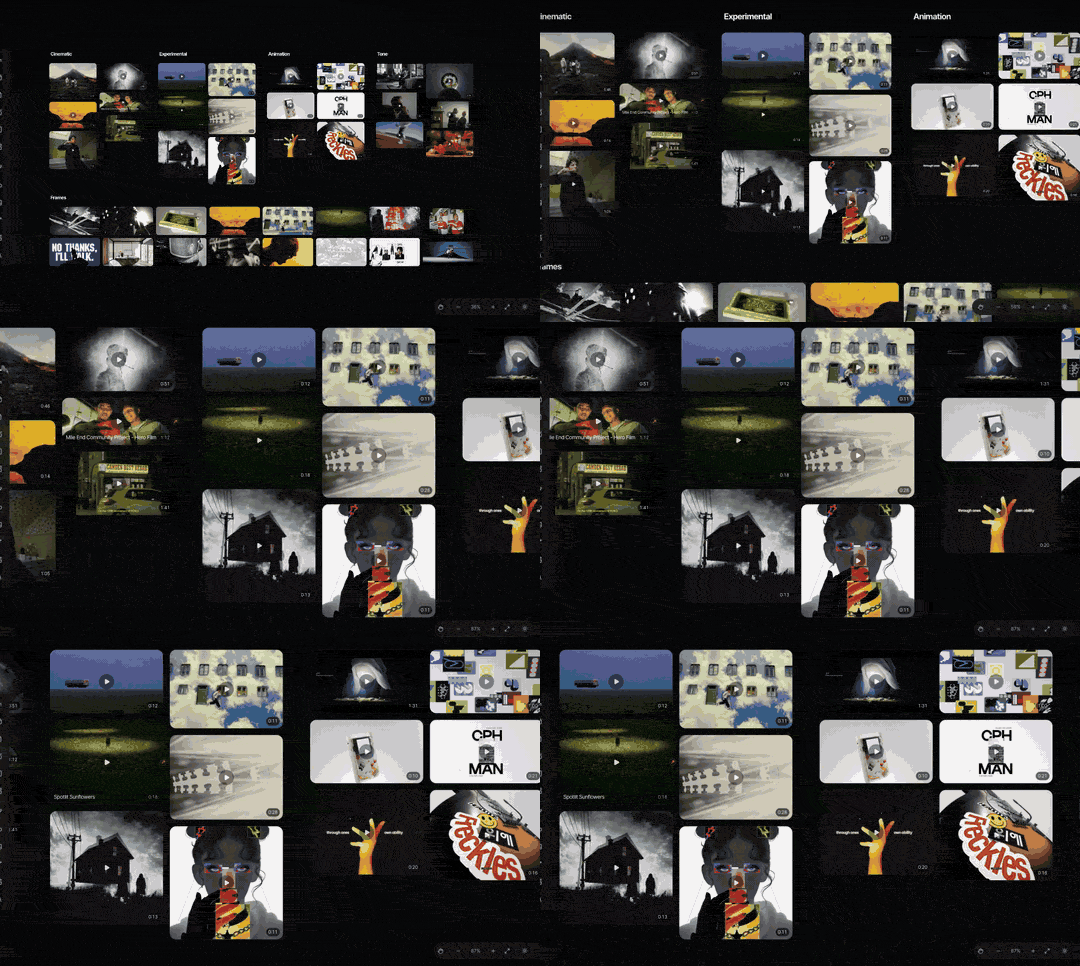
Keep the frames you use. If the job goes ahead, they become the start of the shot list and the visual style guide.
3. Deliverables
The most important table in the proposal. List every file the client will receive.
| Version | Length | Aspect ratio | Format | Where it runs |
|---|---|---|---|---|
| Hero film | 60 s | 16:9 | ProRes master and H.264 | Website, YouTube |
| Cutdown | 30 s | 16:9 | H.264 | YouTube pre-roll |
| Social cutdowns, x3 | 15 s | 9:16 | H.264, subtitles burned in | Reels, TikTok |
| Bumper | 6 s | 16:9 and 9:16 | H.264 | Paid social |
| Stills | n/a | 4:5 and 1:1 | JPEG | Organic social |
| Subtitles | n/a | n/a | SRT file | All platforms |
Every row costs something: an extra aspect ratio means framing for it on the day and reformatting it in the edit, and each subtitle file is more work in post. Pricing versions per row makes it obvious why a fourth cutdown isn't free.


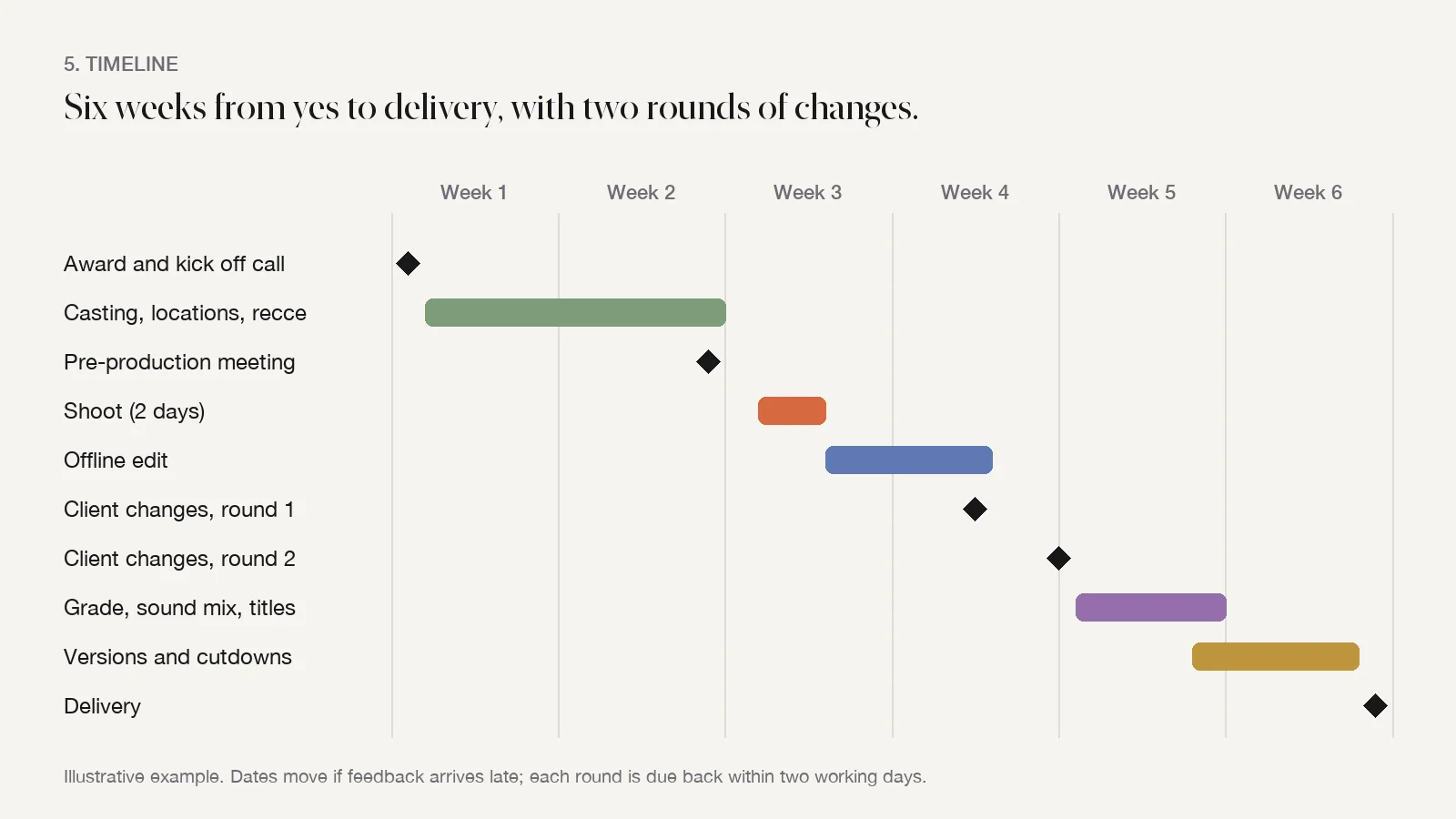
4. Timeline
Dates from confirmation to delivery, including when you need feedback. The feedback dates are what keep the schedule real: write how long the client has for each round and what happens if it's late.
5. Budget
Break the cost into lines a client can understand, and keep your working (days times rates) in a separate sheet you can show if asked. A budget with one total invites a client to haggle the total; a budget with lines invites a conversation about scope.
| Line | What it covers | How to price it |
|---|---|---|
| Pre-production | Producer and director prep, casting, location scouting, recce | Prep days times day rates |
| Crew | Everyone on the shoot, plus prep and wrap days for heads of department | Days times rates, plus an overtime allowance |
| Kit | Camera, lenses, lighting, grip, sound | Hire company quote, or your own kit at a day rate |
| Locations | Fees, permits, facilities, parking | Quotes from the location or its agent |
| Talent | Fees, usage buyouts, casting sessions | Agent quotes, priced against the usage in section 7 |
| Art department and wardrobe | Props, set dressing, styling | A budget per department |
| Travel, catering and insurance | Getting people there, feeding them, cover for kit and liability | Quotes and per head costs |
| Post-production | Edit, grade, sound mix, graphics, VFX, subtitles, versioning | Days times rates for each suite |
| Music | Library, commissioned or licensed track | Licence quote against the usage |
| Production fee and contingency | The company's margin, and a buffer for the unknown | State both openly |
Pricing crew days
For crew rates on commercials in the UK, the APA (the trade body for companies that make commercials) publishes recommended terms for crew, agreed with Bectu. The version effective from 1 September 2026 sets the basic day as 10 hours plus an hour for lunch, and recommends daily rates such as £935 to £1,561 for a director of photography, £529 to £656 for a camera operator, £541 to £668 for a sound mixer and £461 to £575 for a focus puller. Bectu also publishes rate cards by department for film and independent production. Corporate and online work can pay differently, so treat these as reference points, not a price list.
If you're freelance and pricing your own days, start from what you need to earn, not from what you think the client will pay. Our UK freelance day rate calculator works back from take-home pay through tax, costs, holidays and unbilled days to a day, half day and week rate. Our guide to calculating a freelance day rate shows the sums, and the videographer day rates post has sourced market ranges.
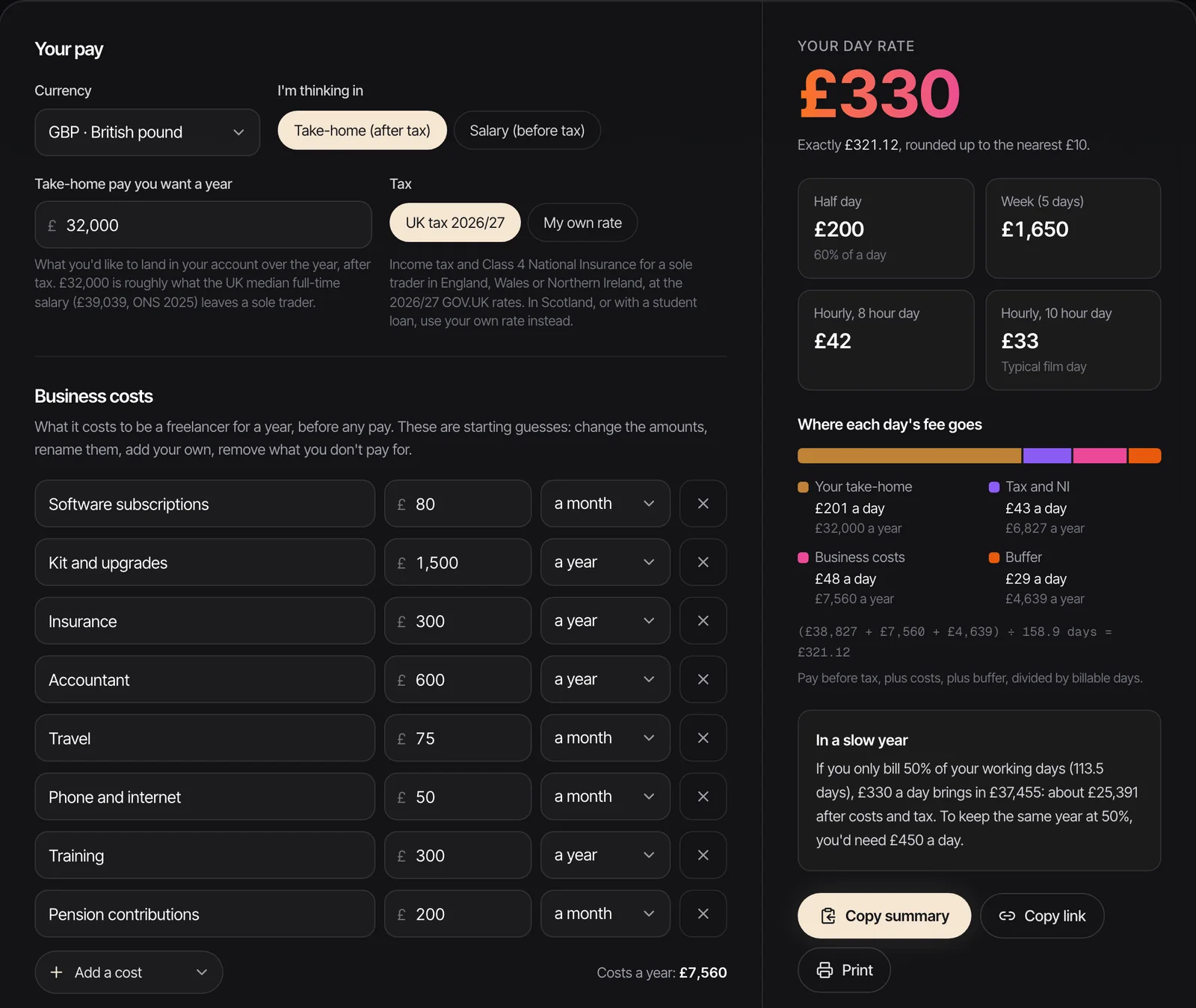
For what whole productions cost, from a one camera interview to a commercial shoot, see our guide to how much video production costs in the UK.
6. Music
Say which kind of music you've allowed for, because the cost range is enormous. Production music libraries sell licences at published rates. A commissioned score costs the composer's fee and you agree the rights with them. A commercial track usually needs two licences: one for the song (from the publisher) and one for the recording (from the label), both priced against where and how long the film runs. If the client wants a track you haven't cleared, put it in the proposal as a separate, unconfirmed cost.
7. Usage
Usage is where, how and for how long the client can use the film: which media (online, paid social, TV, cinema, out of home), which territories, and for what period. It matters because talent buyouts and music licences are priced against it, and because the client should know what they're buying. Write the usage your price covers, and say that wider use is quoted separately. The detailed rights belong in the contract, so get that checked by a solicitor or your trade body.
8. Revisions
Define a round of changes: one consolidated set of notes from the client, delivered by the date in the timeline. Then say how many rounds are included at each stage, for example two at offline edit and one after the grade and mix, and what happens after that (an extra day at an agreed rate). Notes with timecodes make each round faster for everyone, so ask for them.
9. Terms
The page procurement reads first. Cover at least:
- Payment. When you're paid: for example, a deposit on confirmation and the balance on delivery, and how many days after invoice.
- Cancellation. What's due if the job is cancelled or postponed close to the shoot. The APA's crew terms are a useful reference: for crew, 50% of the fee at six to four days' notice, 75% at three to two days, and the full fee the day before.
- Weather and force majeure. What happens if an exterior shoot can't go ahead, and who pays for a weather day.
- Overtime. How long a shoot day is, and what extra hours cost.
- Ownership. Who owns the footage and the finished film, and when that passes to the client.
- Validity. How long the quote stands, because crew and kit prices move.
Templates for terms are a starting point at best. Your terms are a contract, so have them checked by a solicitor, or ask your trade body (the APA for commercials production, Bectu for crew) what its members use.
Sending it
One PDF, named with the client and the date, under 10 pages plus the budget sheet. The summary page first. If there's a treatment, send it as its own file so the creative team can forward it without the costs. Follow up with a call rather than a second email.
FAQs
What should a video production proposal include?
A summary page, your understanding of the brief, the approach, the deliverables, a timeline, the budget, music, usage, revisions and terms. The deliverables table and the budget lines do most of the work: they make clear what the client gets and why it costs what it does.
How do I price a video production proposal?
Work out the days needed for each stage and multiply by day rates, then add kit, locations, talent, music, post and insurance, plus a production fee and a contingency. For crew rates, the APA's recommended terms for commercials and Bectu's rate cards are useful references. For your own rate, start from what you need to earn.
How many revisions should a video proposal include?
Define a round as one consolidated set of notes, then state how many rounds are included at each stage, such as two at offline edit and one after the grade and mix. Say what extra rounds cost. Clear rounds protect the schedule as much as the budget.
What are usage rights in a video proposal?
Usage is where, how and for how long the client can use the film: the media, territories and period. Talent buyouts and music licences are priced against it, so state the usage your price covers and quote wider use separately. Get the contract wording checked by a solicitor.
Should a video proposal include a contingency?
Yes, shown openly as its own line. It covers the unknowns, like weather or a location falling through, and it's easier to agree in advance than to ask for later. Say how it will be used and whether unused contingency comes back to the client.
How long should a video production proposal be?
Short enough to read on a phone: a one page summary, then one section per page, usually under ten pages plus a budget sheet. The summary should carry the decision on its own.
Keep reading
All articles
How Much Does Video Production Cost in the UK? (2026 Guide)
Every video quote is the same handful of lines in different sizes. Here they are, priced from published 2026 rates, with three worked budgets and the questions that get you a quote you can compare.
How to Collect References From Clients (Without 40 WhatsApps)
A client who sends forty links has told you everything and nothing. Ask for four, each with a sentence and a timecode, and you'll learn more.

Director's Treatment Examples: What Winning Commercial Treatments Include
Real commercial treatments rarely go public, because they carry someone else's script. So here's where to find the ones that are, and an invented one built page by page to show what each page is for.